French cheese pairing is a regional science. From the ‘King of Cheeses’ to the pungent ‘Illegal’ Époisses, explore our master matrix of authoritative pairings.
May 10, 2026 · 7 min read
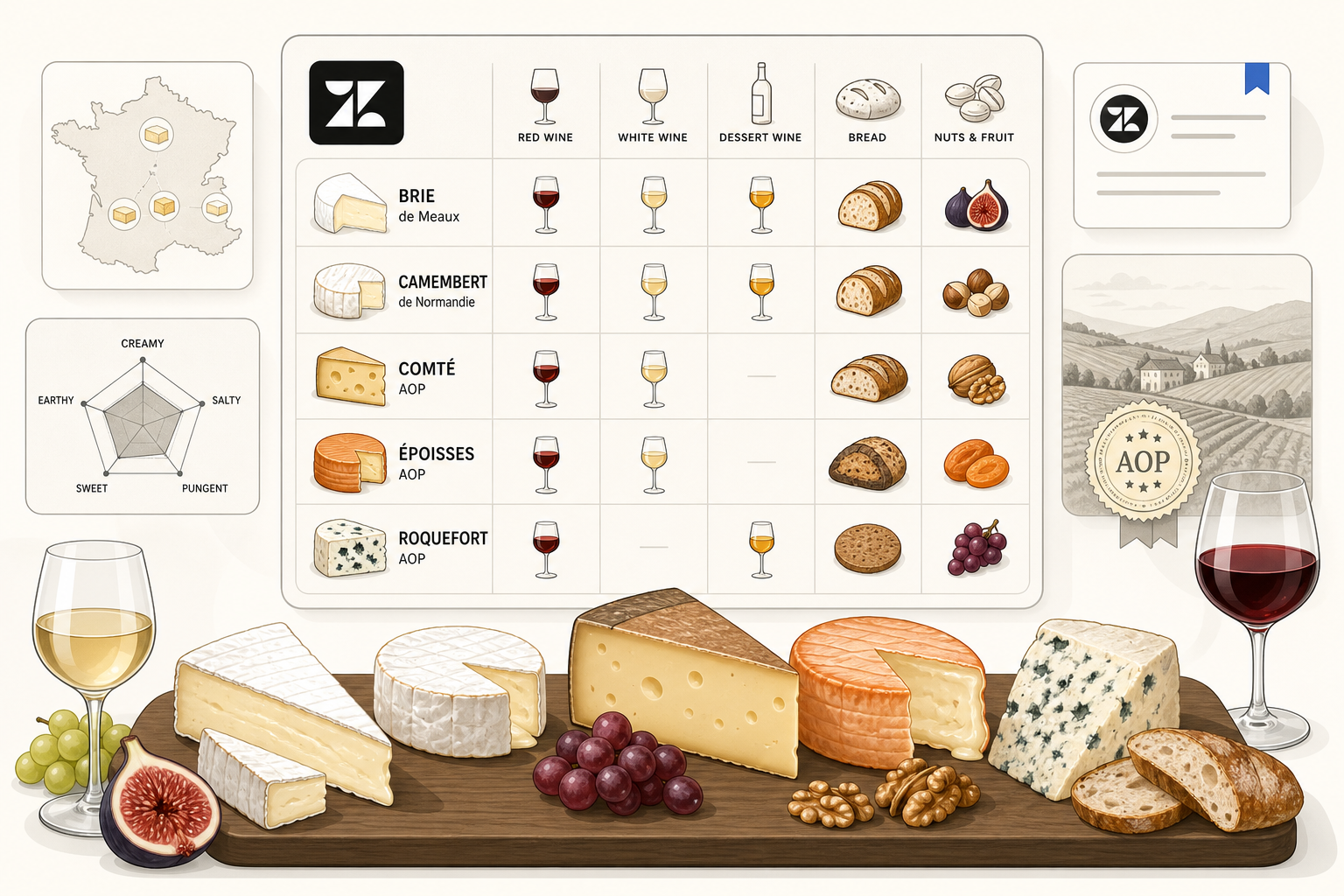
French cheese pairing is more than a tradition; it’s a regional science where the rule of terroir often dictates the perfect glass. Whether you’re balancing the milky sweetness of a Brie de Meaux or the saline bite of a Roquefort, the right pairing can elevate a simple board into a culinary masterpiece. In this 2026 guide, we break down the master matrix of French pairings, from classic vintages to artisanal accompaniments.
As a food stylist and photographer here at ViaFrance, I’ve spent years capturing the rustic elegance of a well-curated cheese board. There is something deeply satisfying about the way a crumbly piece of Comté sits next to a handful of toasted walnuts, or how the sunset orange of an Époisses rind glows under the right light. But beyond the aesthetics, the flavor chemistry is what truly brings the experience to life. We believe that everyone should be able to navigate the world of AOC and AOP labels with confidence, turning a casual evening into a full sensory journey through the French countryside.
1. The science of terroir: Why regional pairings rule
In French gastronomy, the concept of “terroir” is the cornerstone of everything we do. It’s the idea that the specific environment.the soil, the climate, the altitude, and even the local grasses the cows graze on.imprints a unique identity on a product. When we talk about a French cheese pairing matrix, we are essentially mapping these environmental connections.
The logic of regional matching is simple: what grows together, goes together. For example, a Comté AOP produced in the Jura Mountains is naturally destined to be paired with a white Vin Jaune from the same region. Both share a nutty, oxidative profile that has been cultivated in the same cool mountain air for centuries. This isn’t just a culinary suggestion; it’s a tradition preserved by strict AOC (Appellation d’Origine Contrôlée) and AOP (Appellation d’Origine Protégée) certifications. These labels ensure that the cheese is made using traditional methods in its historical birthplace, protecting the integrity of the pairing profiles we love today.
2. From mild to intense: Navigating the French cheese scale
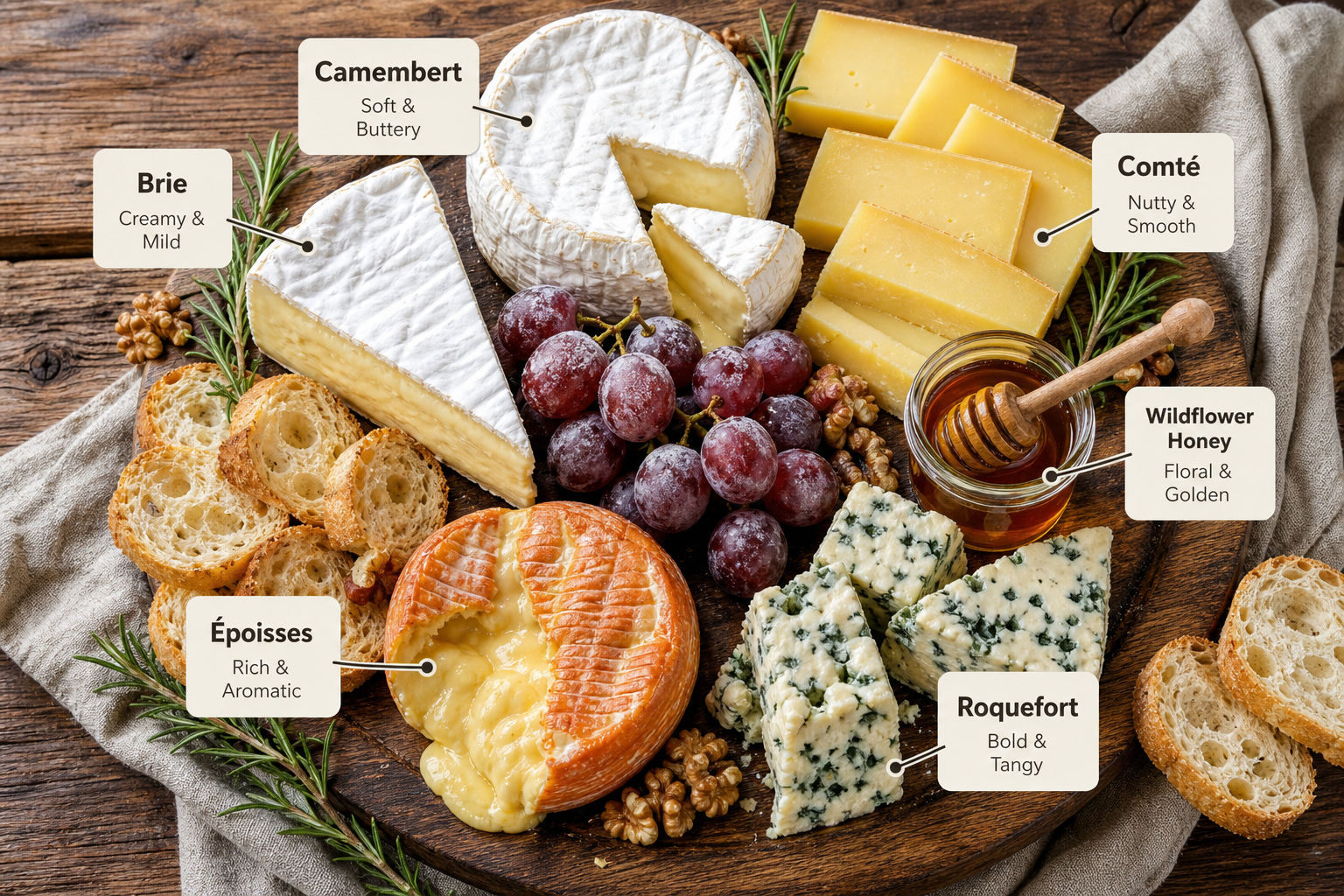
When assembling a board, we always recommend organizing your tasting along an intensity scale. Starting with a powerful blue and then trying to taste a delicate Brie is a quick way to lose the nuances of the milder cheese. We generally group the heavy hitters of the French world into five core icons:
- Brie de Meaux (Soft): Known as the “King of Cheeses,” this is your starting point. It’s milky, buttery, and approachable.
- Camembert de Normandie (Soft): A close cousin to Brie but with a more earthy, mushroom-forward punch.
- Comté (Semi-Hard): The versatile workhorse of the French board, offering nutty and savory notes that change significantly with age.
- Époisses (Pungent): A powerful, washed-rind cheese that is famously aromatic and creamy.
- Roquefort (Blue): The saline, tangy finale that brings a sharp bite and a luxurious, creamy finish.
One of the most fascinating aspects of this scale is the “illegal” allure of certain varieties. For instance, Époisses AOP is often difficult to find in its true raw-milk form in the US due to strict import regulations on raw milk cheeses aged for less than 60 days. This “banned” status only adds to its legend in the culinary world, where its pungent aroma is so intense it was once reportedly banned from public transport in France.
3. The ultimate French cheese pairing matrix: 2026 edition
To help you master your next gathering, we’ve developed this comprehensive matrix. It covers the classic alcohol-based matches alongside non-alcoholic (N/A) alternatives and ideal artisanal accompaniments.
| Cheese (AOC/AOP) | Texture | Classic Wine Match | N/A Alternative | Ideal Accompaniment |
|---|---|---|---|---|
| Brie de Meaux | Soft | Champagne / Chardonnay | Sparkling Apple Juice | Truffles / Fig Jam |
| Camembert de Normandie | Soft | Beaujolais / Cider | Normandy Apple Cider | Honey / Baguette |
| Comté (12-24 mo) | Semi-Hard | Vin Jaune / Jura White | Nutty Herbal Tea | Walnuts / Pear |
| Époisses | Pungent | Marc de Bourgogne | Spiced Grape Juice | Gingerbread / Jam |
| Roquefort | Blue | Sauternes / Port | Sweet Pear Nectar | Quince Paste / Rye |
4. Deep dive: The soft icons (Brie and Camembert)
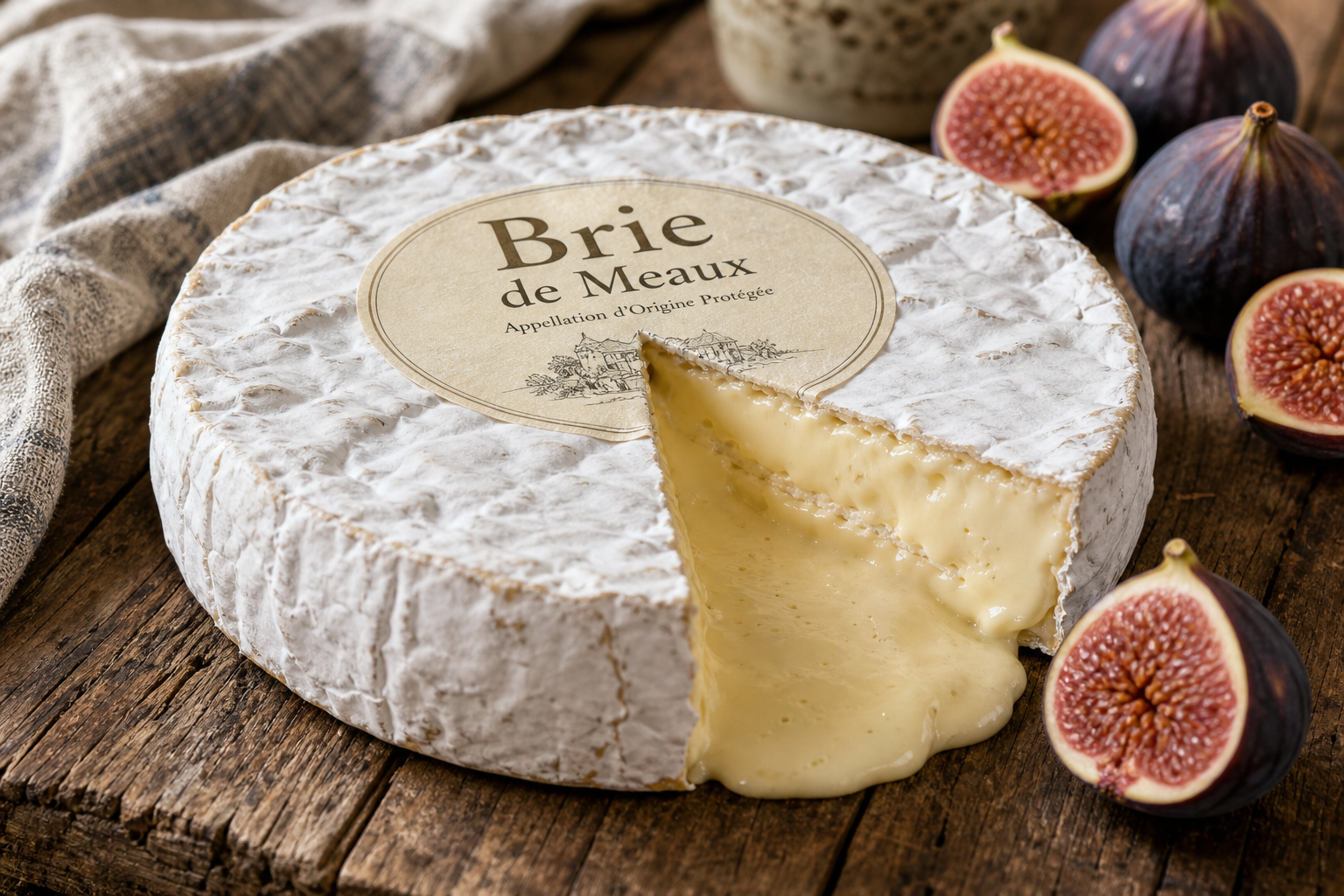
Brie de Meaux and Camembert de Normandie are often confused, but they offer distinct experiences. Brie de Meaux, which was famously awarded the title of “King of Cheeses” at the Congress of Vienna in 1814, is typically larger and milder. It features a rich, buttery interior with a bloomy rind that smells faintly of mushrooms and yeast.
Camembert de Normandie, on the other hand, is usually smaller and features a much more intense, earthy profile. Attributed to Marie Harel in 1791, it is traditionally sold in small poplar wood boxes which help it retain its moisture and shape.
The key to pairing these soft icons is acidity. Because both cheeses have a high fat content that coats the palate, you need a beverage with enough acidity to “cut” through that richness. This is why Brut Champagne or a crisp Normandy cider works so perfectly. The bubbles and acidity refresh your taste buds after every creamy bite.
5. The powerhouses: Comté, Époisses, and Roquefort
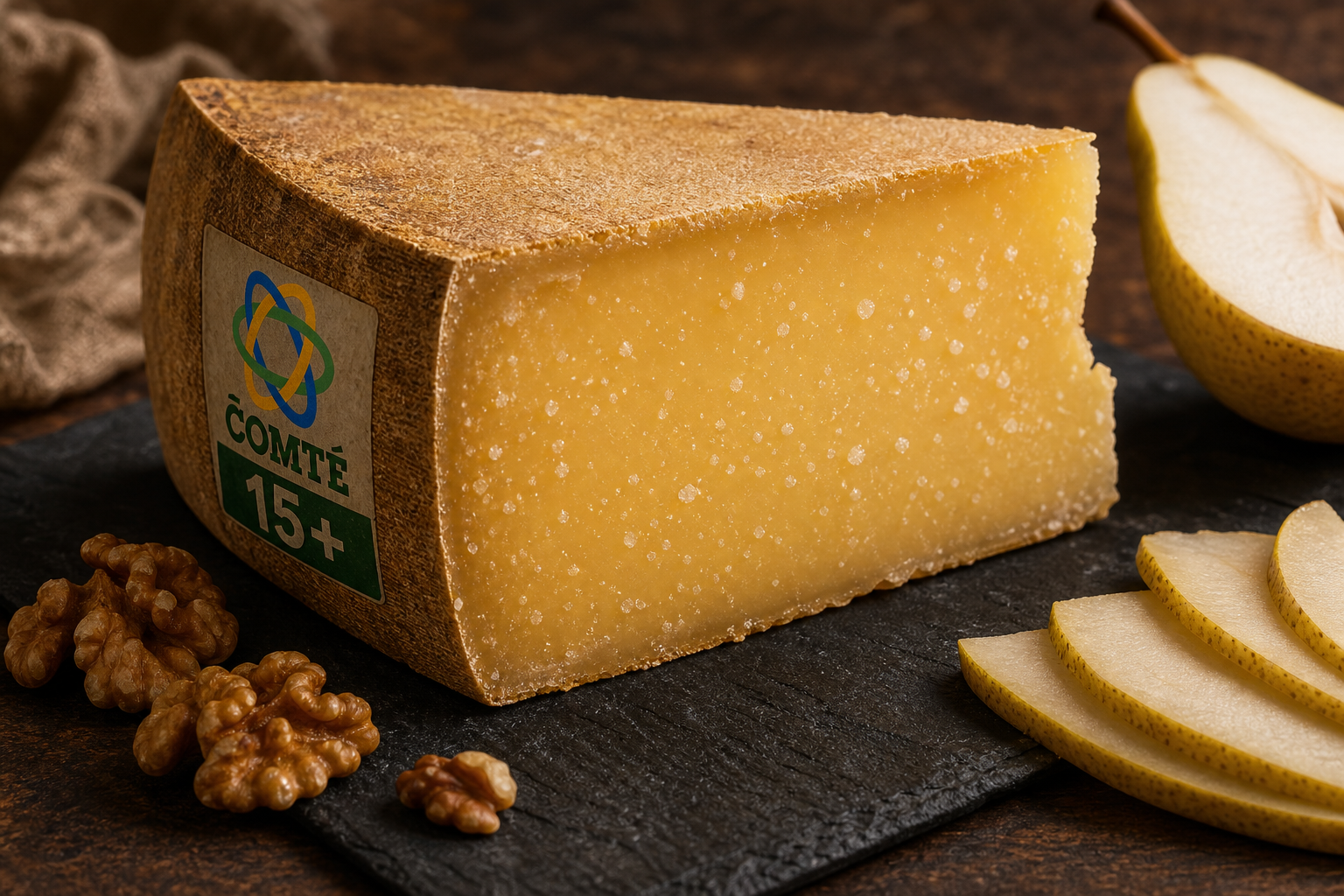
Moving into the more intense territory, we encounter cheeses that demand stronger companions. Comté is perhaps the most versatile of the bunch. Because it can be aged anywhere from 4 to 36 months, its flavor profile evolves from milky and supple to nutty, crunchy, and intensely savory. We recommend a middle-aged Comté (around 12 to 18 months) for a balanced board, as it pairs beautifully with the oxidative notes of a Jura white wine.
Époisses is the legend of the “smelly” cheese world. Its orange rind isn’t natural; it’s the result of being washed repeatedly in Marc de Bourgogne, a local grape brandy. This process creates a powerful aroma that belies its incredibly creamy, almost liquid interior. To stand up to this intensity, you need a beverage with equal character, like the brandy itself or a robust red Burgundy.
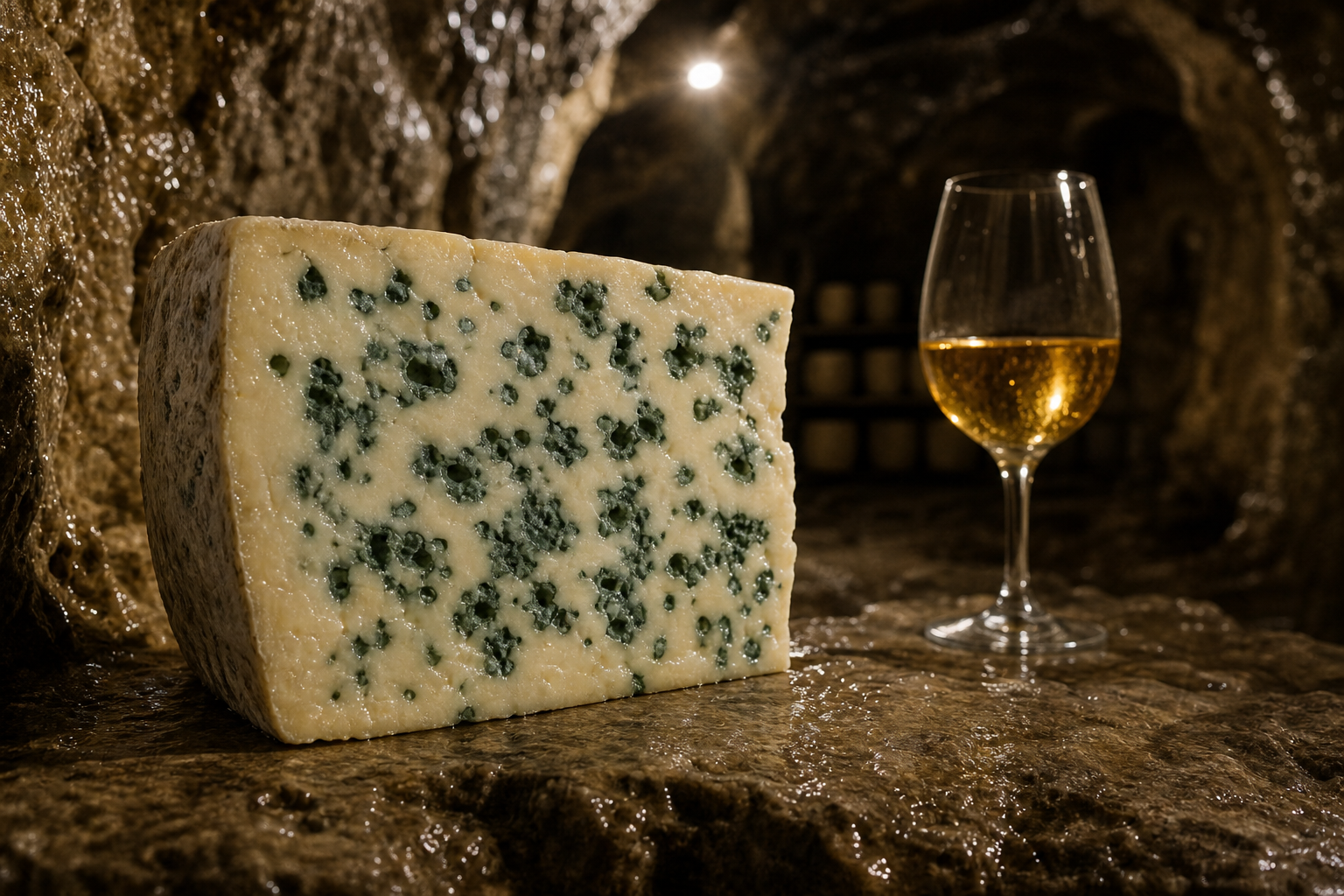
Finally, there is Roquefort. This is the only cheese allowed to be called Roquefort if it is aged in the limestone caves of Roquefort-sur-Soulzon. The saline, tangy bite of the Penicillium roqueforti mold is legendary. The classic pairing here is the sweet/salty balance of a Sauternes. The high sugar content of the dessert wine rounds out the sharp saltiness of the blue cheese, creating a harmonious finish that is a staple of French gastronomy.
6. Building your matrix board: A 2026 masterclass
Creating a professional-level cheese board at home is all about the details. Here’s how we do it at ViaFrance:
- Temperature is critical: Never serve cheese straight from the fridge. Take it out at least 30 to 60 minutes before serving. This allows the fats to soften and the full aromatic profile to emerge.
- Cutting styles matter: For round cheeses like Camembert, cut them like a cake into wedges. For wedges of Comté, slice them into thin, manageable rectangles. The goal is to ensure every guest gets a bit of the rind and the heart.
- Source authentic labels: Look for the yellow and red AOP seal. At ViaFrance, we focus on sourcing products that respect these regional traditions, as they are the only way to guarantee you’re getting the true flavor profile intended by the cheesemaker.
Bottom line? Experimenting with the French cheese pairing matrix is about finding what brings you joy. Whether you stick to the centuries-old regional rules or find a new favorite in a spiced grape juice and gingerbread combo, the terroir of France is yours to explore.
Frequently Asked Questions
How do I use a French cheese pairing matrix to build a board?
A French cheese pairing matrix helps you organize your board by intensity and regional logic. Start with milder cheeses like Brie and pair them with high-acid drinks like Champagne, then move toward intense blues like Roquefort paired with sweet wines like Sauternes to ensure a balanced tasting experience.
Why is the French cheese pairing matrix focused on regional wines?
The matrix focuses on regional wines because of the concept of terroir. Since the cheese and the wine are produced in the same environment, they often share complementary flavor profiles that have been refined over centuries of traditional French gastronomy.
Can I find non-alcoholic options in a French cheese pairing matrix?
Yes, a modern French cheese pairing matrix should include N/A alternatives like sparkling apple cider for Camembert, nutty herbal teas for Comté, or sweet pear nectar for Roquefort to accommodate all guests while maintaining the flavor balance.
Does the French cheese pairing matrix change for different aging tiers?
Absolutely. For example, a young Comté in the French cheese pairing matrix might be paired with a light white wine, whereas an extra-aged 24-month Comté requires a more robust, nutty wine or even a rich craft beer to stand up to its crystallized texture.
Where can I download a French cheese pairing matrix for my next party?
You can use the HTML table provided in this guide as your French cheese pairing matrix. It’s designed to be easily scannable so you can quickly pick out the right accompaniments, wines, and textures for the most iconic French AOP cheeses.
Is every AOP cheese included in the French cheese pairing matrix?
While there are over 40-50 AOP cheeses in France, the French cheese pairing matrix typically focuses on the five or six most iconic pillars including Brie, Camembert, Comté, Époisses, and Roquefort to give you a solid foundation for any artisanal board.