Master the art of Moroccan mechoui, the signature slow-roasted lamb dish. Learn traditional techniques, authentic spices, and how to recreate this North African classic at home.
July 6, 2026 · 12 min read
TL;DR
Moroccan mechoui is a centuries-old dish featuring whole lamb slow-roasted until fall-apart tender, seasoned with cumin, turmeric, ginger, and cinnamon. While traditionally made in underground ovens by specialized cooks, home versions work beautifully with low-heat roasting for 6-8 hours and a spiced marinade. The result is spectacular: tender meat infused with North African warmth that tastes like celebration.
What is moroccan mechoui lamb?
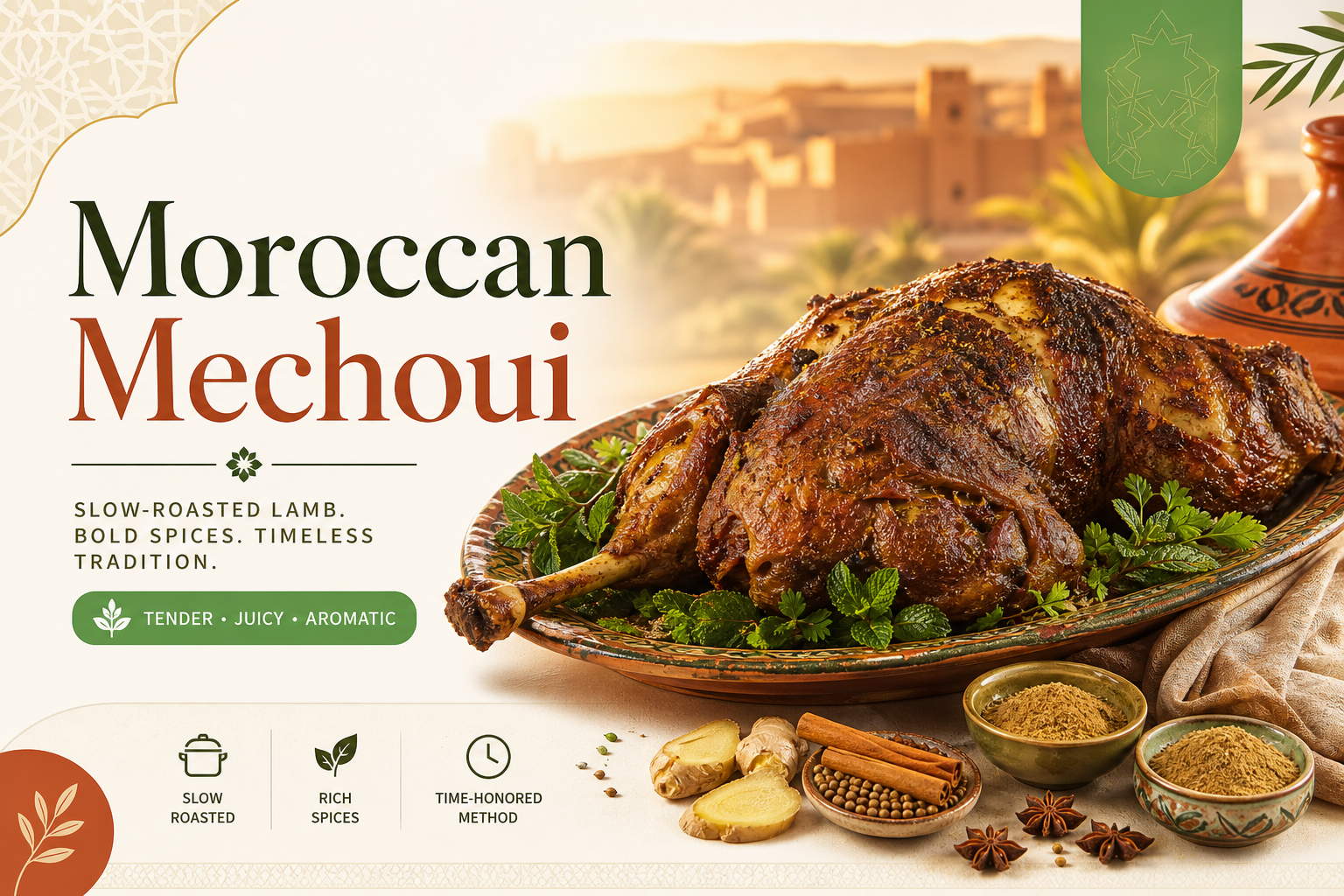
Moroccan mechoui is the signature North African barbecue dish-a whole lamb roasted low and slow until every fiber is tender enough to fall from the bone with a fork. The term “mechoui” describes both the final dish and the ancient cooking technique behind it.
Traditionally, this lamb cooks in an underground clay oven or on a rotating spit over charcoal fire. The result is legendary: outer meat that’s been kissed by smoke and fire until it’s caramelized and crisp, inner meat so tender it melts on your tongue. The entire process is about patience and precision-low heat over many hours transforms a whole animal into something transcendent.
This isn’t restaurant theatre. It’s one of the oldest techniques for cooking meat, perfected across centuries of Moroccan tradition. When you taste authentic mechoui, you’re tasting history-the same method, the same spices, the same communal experience that’s been central to North African culture since ancient times.
The traditional slow-roasting method
Authentic mechoui follows a precise process that varies slightly by region and family tradition, but the fundamentals remain constant.
Preparation: A whole lamb (typically 25-40 pounds) gets thoroughly cleaned and patted dry. The inside and outside receive a generous coating of traditional marinade-usually a mixture of garlic, cumin, turmeric, ginger, and sometimes tomato paste. The marinade coats every surface, working its way into the meat so the flavor penetrates from inside out. The lamb rests for several hours (or overnight) to absorb the spice.
Equipment: In Morocco, the traditional setup is an underground clay oven-a large pit lined with clay that holds heat evenly and distributes smoke throughout. Professional mechoui makers maintain these ovens with meticulous care. For spit-roasting, a strong metal spit passes lengthwise through the lamb, and the whole thing rotates slowly over a bed of charcoal.
Cooking process: The lamb goes into the oven or onto the spit, and then it’s all about time and temperature control. Traditional methods use low, indirect heat-nothing fast or fierce. The lamb cooks for many hours (typically 5-8, depending on size and heat), rotating regularly if on a spit, or left undisturbed in the clay oven where heat circulates naturally.
The finish: As the lamb nears completion, the outside should be burnished and caramelized, with a light char from the smoke. The meat should be so tender that touching it with a fork causes sections to fall away. No slicing required-the meat separates naturally.
Serving: Mechoui arrives at the table simply seasoned with cumin and salt, allowing the natural flavors and the spices from the marinade to shine. It’s eaten with hands, tearing pieces from the bone, with flatbread on the side to wrap around the meat and catch the juices.
Essential ingredients and spices
The magic of mechoui lives in the spice profile. These aren’t complex spice blends-they’re essential, foundational flavors that define North African cuisine.
The lamb: Whole lamb is non-negotiable for authentic mechoui. The age matters-younger lamb (6-12 months old) is more tender; older lamb has richer flavor but requires even longer cooking. The fat distribution in whole lamb self-bastes the meat during the long cook, keeping everything moist and flavorful.
The core spices: Cumin, turmeric, ginger, and cinnamon form the backbone. Each brings something essential:
- Cumin: Earthy warmth, the anchor spice in every bite
- Turmeric: Subtle earthiness and the warm color that makes mechoui visually distinctive
- Ginger: Bright, sharp heat that cuts through the richness of the lamb
- Cinnamon: Sweet warmth that rounds everything out, adding complexity
The marinade base: Traditional recipes use garlic, oil, and often tomato paste as the carrier for spices. The garlic becomes sweet and mellow after hours of roasting. Tomato adds body and a subtle acidity that balances the richness.
Salt and pepper: Used both in the marinade and as final seasoning. Don’t skimp-the long cooking process allows salt to penetrate and season the meat thoroughly.
Optional additions: Some traditions add a pinch of turmeric-infused butter (ghee) to the surface near the end of cooking, adding richness. Paprika sometimes appears in regional variations. Herbs like cilantro or parsley finish the dish, adding fresh contrast to the warmth of the cooked spices.
The beauty of this spice profile is its restraint. Moroccan cuisine celebrates these five or six core flavors rather than building complex blends. The long, slow cooking allows them to meld and deepen rather than compete.
Cultural significance and tradition
Mechoui isn’t just food-it’s a cultural anchor in Moroccan society and identity.
Celebration and community: Mechoui holds special significance in Moroccan culture, traditionally served at Eid Al-Adha celebrations and other major social occasions. The preparation is communal, often involving extended family or neighbors gathering to tend the fire and watch the transformation. The eating is communal too-people gather around, tearing meat from the bone with their hands, sharing bread, talking for hours.
Specialist craft: In Morocco, mechoui makers are specialists-people who have apprenticed for years to master the technique. Professional mechoui restaurants operate specifically around this one dish, built by families who’ve been perfecting the method for generations. You see the skill when you watch them-the timing, the spit rotation, the ability to read doneness by sight and touch.
Rural and urban divide: In rural Morocco, families still prepare mechoui in their own underground ovens for special occasions. In urban areas, most people visit dedicated mechoui restaurants rather than cooking at home-the equipment and time investment are significant. For visitors to Morocco, eating mechoui at a traditional restaurant becomes a cultural experience, a chance to witness the craft and taste something that connects to centuries of tradition.
Eid Al-Adha: The connection to Eid Al-Adha is deep-the lamb in mechoui carries religious and cultural weight during this celebration. Many Moroccan families still reserve mechoui for this occasion specifically, making it an annual ritual that marks the year.
Why restaurant mechoui differs from home cooking
If you’ve eaten mechoui at a traditional restaurant in Morocco, you know it tastes like nothing else. Home versions can come close, but several factors create the difference.
Equipment: The underground clay oven holds and distributes heat in ways a modern home oven can’t replicate. Charcoal fire creates smoke flavors that are nearly impossible to reproduce indoors. The spit-roasting method, with its constant rotation and exposure to moving heat, creates a caramelized crust that home equipment struggles to match.
Time and precision: Professional cooks have done this thousands of times. They read the lamb’s progress by sight and touch, adjusting heat and rotation by imperceptible amounts. They know exactly when the meat is ready. Home cooks are working from guidelines and timers-close, but not quite the same.
Scale: A whole 40-pound lamb cooks differently than the smaller cuts most home cooks use. The mass, the fat distribution, the thickness-all behave differently. Professional cooks account for these variables through experience.
Community context: Part of the magic of restaurant mechoui is the setting-the open fire, the skilled hands working, the other diners tearing meat and sharing the experience. That atmosphere shapes how the food tastes.
That said, home adaptations work genuinely well. Community cooks report that a low-heat oven or slow cooker with the proper marinade produces excellent results, just with a slightly different final character than the traditional underground version.
Bringing moroccan mechoui home
If you want to make mechoui at home, the approach depends on your equipment and ambition.
For the oven method: Marinate a lamb shoulder or leg (smaller than whole lamb, but same approach) in cumin, turmeric, ginger, cinnamon, garlic, oil, and salt. Place it in a roasting pan, cover tightly with foil, and roast at 275°F for 6-8 hours until the meat falls apart. The last 30 minutes, uncover to let the surface caramelize. The low, slow heat mimics the underground oven’s gentle approach.
For outdoor grilling: Set up a charcoal grill for indirect heat (coals on one side, lamb on the other), maintain 225-250°F, and cook for 5-7 hours, rotating occasionally. This gets you closer to the traditional spit-roast flavor.
Spice application: Mix your spices thoroughly into oil with minced garlic and tomato paste. Coat the meat generously inside and out. Let it sit at room temperature for 2-3 hours before cooking so the spices can start their work.
Patience: The hardest part of home mechoui is resisting the urge to rush. Low heat, long time-that’s the whole technique. No shortcuts work here.
Try viafrance
For anyone wanting to explore French and Moroccan cooking, viafrance.store offers beautifully styled recipe guides for both cuisines. ViaFrance’s food photography brings the warmth and precision of professional plating into home kitchens, with detailed step-by-step tutorials that make ambitious cooking accessible.
Whether you’re building skills for slow-roasting techniques or exploring the full range of North African and French cuisine, ViaFrance provides the inspiration and instruction to bring these dishes to your own table.
Sources
- Wikipedia: Méchoui
- Tasting Table: 15 Traditional Moroccan Dishes You Must Try At Least Once
- Reddit: r/Cooking – Moroccan and slow-roasting discussions
- ViaFrance – Contemporary food blog and recipes
Frequently Asked Questions
What is moroccan mechoui lamb exactly?
Moroccan mechoui is a whole lamb roasted low and slow in traditional underground clay ovens or over open fire until the meat is incredibly tender and falls off the bone. The dish has been central to Moroccan culture for centuries, combining ancient cooking techniques with the essential spices of North African cuisine like cumin, turmeric, ginger, and cinnamon.
Can you make moroccan mechoui at home?
While traditionally made by specialists in underground ovens, home cooks have adapted the technique using modern equipment. You can slow-roast lamb at home using your oven, slow cooker, or outdoor grill with indirect heat. Community members share that adapting the marinade and cooking time (usually 6-8 hours low heat) achieves similar results, though the traditional underground oven flavor is difficult to replicate entirely.
What spices are essential for moroccan mechoui?
The classic spice blend includes cumin, turmeric, ginger, and cinnamon. Traditional preparations use garlic and sometimes tomato in the marinade, layered with these warming spices. The combination creates the signature North African flavor profile that defines authentic mechoui-earthy, warm, and deeply aromatic.
When is mechoui traditionally served in Morocco?
Mechoui holds special significance during Eid Al-Adha celebrations and other major social occasions in Morocco. The dish represents hospitality, celebration, and community gathering. Many Moroccan families still reserve mechoui for special occasions rather than everyday meals, though specialty restaurants serve it regularly to both locals and visitors seeking an authentic cultural experience.
What’s the difference between restaurant and home-cooked mechoui?
Professional mechoui makers in Morocco have perfected the craft over generations, using specialized underground clay ovens that reach precise heat levels and create unique smoke and flavor. Home adaptations work well but sacrifice some authenticity without the dedicated equipment. The experience of watching professionals prepare mechoui-the spit rotation, charcoal management, and timing mastery-is part of the traditional appeal of dining at a mechoui restaurant.