Learn how to make authentic Moroccan harira soup at home. This traditional tomato, lentil, and chickpea soup is warming, deeply flavorful, and easier than you think.
July 6, 2026 · 14 min read
TL;DR
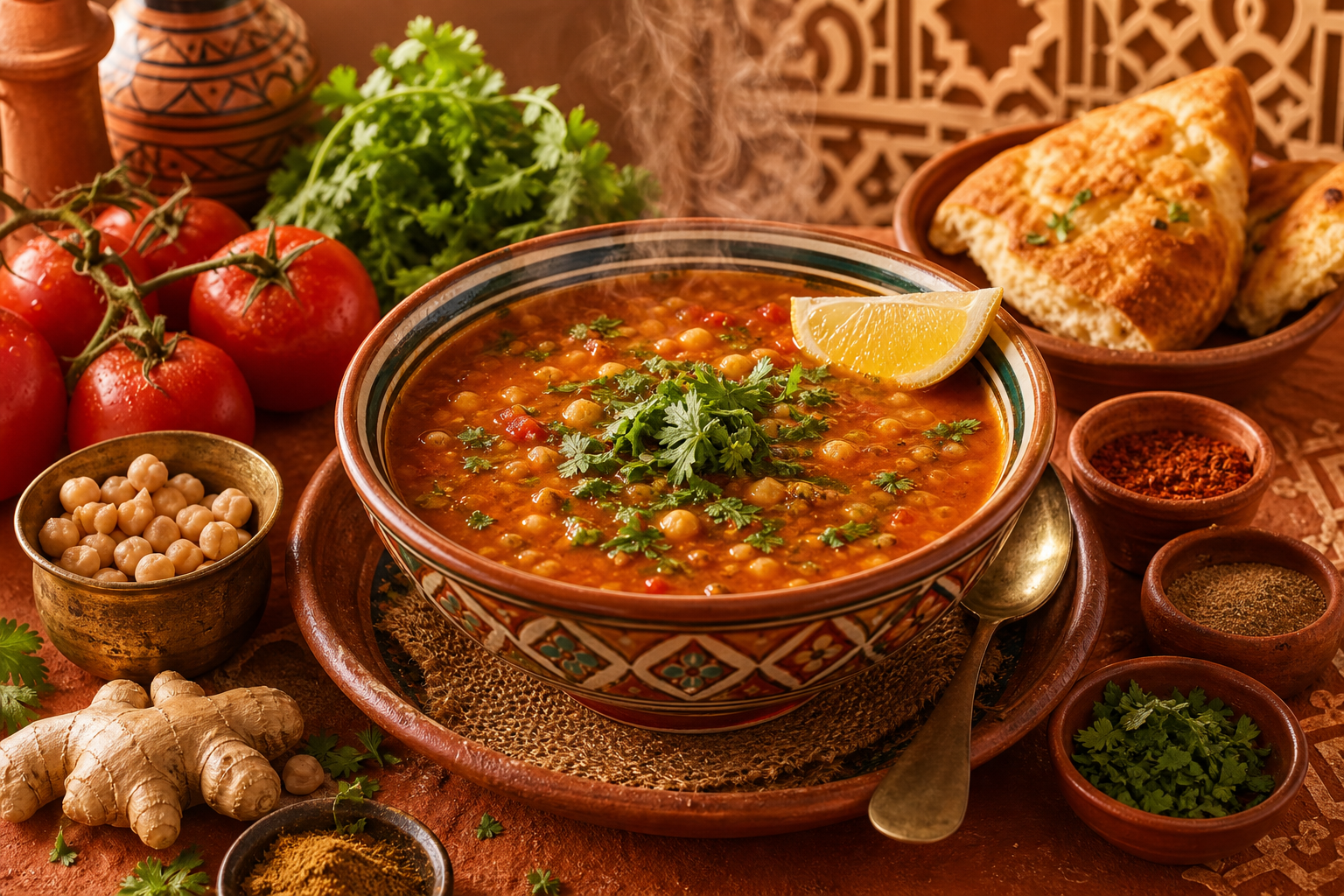
Moroccan harira soup is a warming, deeply flavorful tomato, lentil, and chickpea soup seasoned with ginger, turmeric, and cinnamon. The traditional method involves simmering legumes and aromatics for 45-90 minutes, then thickening with a tedouira (flour-water paste) for a silky finish. The result: a soul-warming bowl that’s rich in protein and fiber, deeply satisfying whether served during Ramadan or any time you crave authentic Moroccan comfort food.
What Is Moroccan Harira Soup?
The name “harira” comes from the Arabic word for silk, referring to the soup’s signature silky, creamy texture. At its heart, moroccan harira soup is a rustic tomato-based soup thickened with legumes-chickpeas and lentils-that’s been warming Moroccan tables for generations.
This traditional soup is found everywhere in Morocco: in home kitchens, in upscale restaurants, at street food stalls, and served across all economic strata. It’s wonderfully fragrant, aromatic with warming spices, and has earned a place as one of Morocco’s most beloved comfort dishes.
The beauty of harira lies in its adaptability. While the core ingredients remain consistent-tomatoes, chickpeas, lentils, onion, celery, cilantro, and a blend of warming spices-the way it’s prepared shifts from family to family, region to region. Some make it light and delicate; others create a thick, zesty soup that’s practically a meal in a bowl.
The Ramadan Connection
Although harira is prepared year-round, it holds special cultural weight during Ramadan. Harira is the most consumed recipe during the month of Ramadan-you can literally walk the residential streets of any Moroccan city and smell it cooking or hear the whistling of pressure cookers.
It’s traditionally served as a starter during iftar (breaking the fast) almost every evening during Ramadan for many Moroccan families, making the meal feel incomplete without it on the table. The warm, nourishing broth gently refuels the body after a full day of fasting.
The Essential Ingredients for Authentic Moroccan Harira Soup
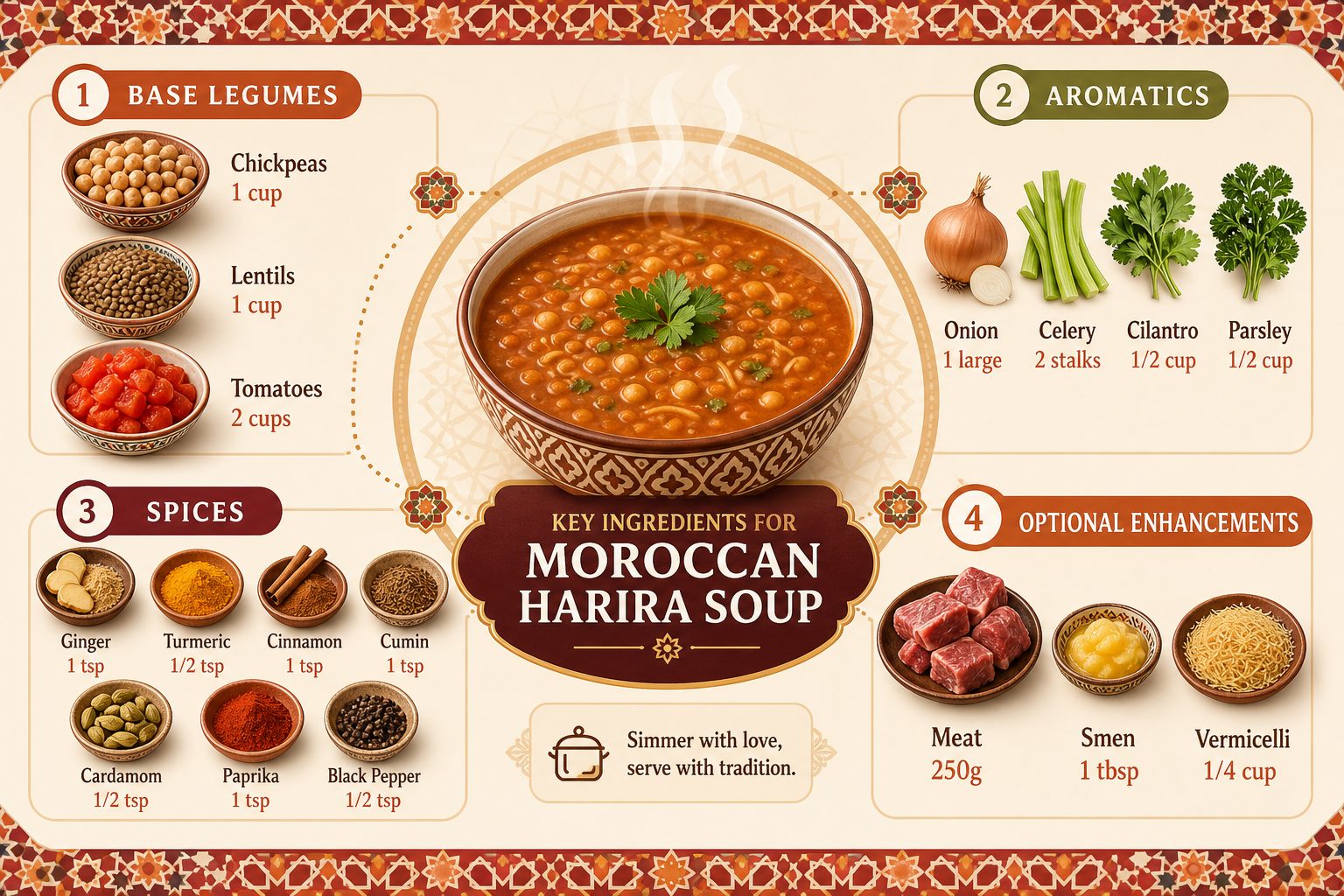
Before you begin, understand that harira’s soul comes from its layers of flavor-not from any single ingredient dominating. Here are the components:
The Base Vegetables & Legumes
Harira starts with three core legumes: chickpeas, green or brown lentils, and tomatoes (fresh or as paste). Each contributes distinct character: chickpeas add creaminess when tender, lentils contribute earthiness, and tomatoes provide acid and body.
- Tomatoes: Fresh tomatoes work beautifully, but canned crushed tomatoes are equally valid. Some cooks use tomato paste or puree for deeper flavor concentration.
- Chickpeas: Soak dried chickpeas overnight then cook from scratch, or use canned (drain well before adding).
- Lentils: Brown or green lentils hold their shape better than red lentils. Red lentils will dissolve into the broth, which some cooks prefer for a thicker, more unified texture.
The Aromatics
- Onion: Finely minced or grated directly into the pot for even distribution.
- Celery: In Morocco, Chinese celery (with its more delicate flavor) is traditional, but regular celery works fine. Chop it small so it cooks down and integrates.
- Fresh herbs: Cilantro and parsley contribute brightness and an aromatic lift. Add these halfway through cooking and again at the end for layered herbal notes.
The Spice Blend
Harira is fragrantly seasoned with warming spices that give it its characteristic depth. The core spices are:
- Ginger: Fresh ginger adds warmth and subtle spice. Some recipes use ground ginger; fresh is preferable for cleaner flavor.
- Turmeric: Earthy, slightly floral. Use a light hand-too much overwhelms the soup.
- Cinnamon: This is sometimes controversial among Moroccan cooks-some love it, others never use it. When used, it’s typically subtle, complementary rather than prominent.
- Cumin, paprika, cardamom, black pepper: Each adds dimension. Cumin brings earthiness; paprika adds depth and color; cardamom contributes subtle floral notes in regional variations.
Optional Enhancements
Meat: Beef, lamb, or chicken can simmer with the broth to add richness and flavor. The meat is often removed and shredded before serving, or left in pieces.
Smen (preserved butter): Optional but recommended for adding a pleasant, almost parmesan-like savory note. A small spoonful near the end adds sophistication.
Vermicelli or rice: Broken vermicelli is the most traditional filler in Morocco, though some regions use rice or noodles.
Step-by-Step: How to Make Moroccan Harira Soup
Prep Work (15 minutes)
Building the Broth (35-90 minutes, depending on method)
Soak dried chickpeas (if using): Place chickpeas in a bowl, cover with cold water, and let soak overnight or for at least 8 hours. Drain and rinse before cooking. If using canned chickpeas, drain and rinse well.
Prep your vegetables and herbs: Finely mince onion, chop celery small, and mince cilantro and parsley. Having everything ready before you start cooking (a technique the French call mise en place) ensures smooth, flowing preparation.
Measure and prepare your spices: Combine ginger, turmeric, cinnamon (if using), cumin, paprika, and black pepper in a small bowl. Toast these lightly in a dry pan for 30 seconds if you’re using whole spices-this releases their essential oils and deepens their flavor.
Traditional Stovetop Method (recommended for deepest flavor):
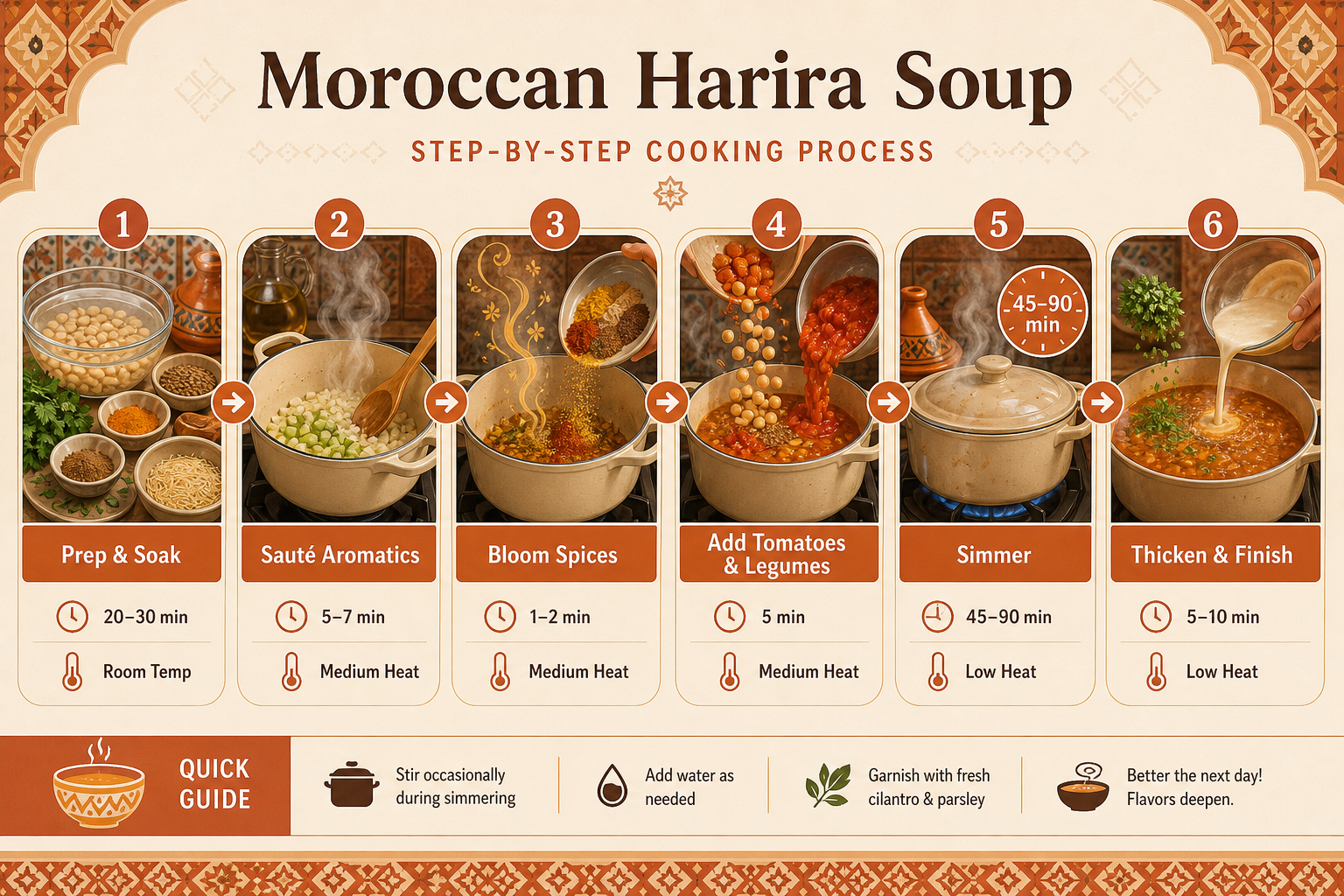
Sauté aromatics: In a large pot, heat olive oil over medium heat. Add the minced onion and celery. Cook gently for 3-4 minutes until softened and fragrant, stirring often.
Bloom the spices: Add your spice mixture (ginger, turmeric, cinnamon, cumin, paprika, black pepper) to the softened aromatics. Stir constantly for 1-2 minutes. This “blooming” step coats the oil with spice and prevents the powders from clumping in the liquid.
Add tomatoes: Pour in crushed tomatoes (about 2 cups) or fresh tomatoes that you’ve roughly chopped. Stir well to incorporate the spices into the tomato liquid.
Add drained chickpeas, lentils, and broth: Add your soaked and drained chickpeas (or canned), brown/green lentils, and vegetable or meat broth (about 8-10 cups, depending on how thick you like your harira). If using meat for flavor, add it now (beef chuck, lamb shoulder, or chicken pieces work well).
Season and simmer: Add salt and black pepper to taste. Bring to a boil, then reduce heat to a gentle simmer. Cover partially and cook for 45-90 minutes, depending on the tenderness of your chickpeas and lentils. The longer they simmer, the creamier the soup becomes as the legumes break down.
Taste and adjust: After about 45 minutes, taste the broth. The chickpeas should be tender but not falling apart. The lentils should be soft. Adjust seasoning (salt, spices) at this point. Add more broth if the soup is too thick, or continue simmering uncovered if it needs to reduce and concentrate.
Pressure Cooker Method (faster):
Follow steps 1-4 above, using a pressure cooker.
Lock the lid, bring to high pressure, and cook for 35-40 minutes if using dried chickpeas, or 20-25 minutes if using canned.
Allow pressure to release naturally for 10 minutes, then quick-release any remaining pressure.
Proceed to the thickening step below.
The Thickening: Creating the Silky “Tedouira”
The signature step that makes harira distinctive is thickening it with a tedouira-a paste of flour and water (or sometimes flour, water, and yeast left to ferment).
Make the tedouira: In a small bowl, whisk together ¼ cup all-purpose flour and 1 cup cold water (or stock) until completely smooth with no lumps. Some traditional recipes include a pinch of salt and a touch of yeast that’s left to ferment for a day or two-this is optional but adds complexity.
Temper the mixture: Ladle about 1 cup of hot broth from the pot into the flour mixture while whisking constantly. This gradually brings the cold flour mixture up to the temperature of the soup, preventing lumps from forming.
Stir into the pot: Pour the tempered mixture slowly back into the simmering soup, stirring constantly. The soup will thicken noticeably-this is the desired effect. It should become creamy and almost silky.
Add fresh herbs: Stir in fresh cilantro and parsley (roughly 2-3 tablespoons of each, finely minced) at this stage. The fresh green flecks add visual appeal and a final aromatic lift.
Optional garnish ingredients: If using smen (preserved butter), add a spoonful now. Broken vermicelli or rice can be added at this stage and cooked for the remaining time needed to tender (usually 5-10 minutes for vermicelli).
Final Touches
Taste the soup one more time. The flavors should be warming, complex, with no single spice dominating. Adjust salt and pepper as needed. A touch of fresh lemon juice brightens the whole dish just before serving.
Authentic Variations & Regional Takes
Harira preparation varies dramatically from family to family and region to region across Morocco. Here are some common variations to explore:
Light vs. Thick
Some Moroccan cooks prefer harira light and mildly seasoned-more of a delicate broth that’s almost tea-like in its clarity. Others create a thick, deeply savory soup that’s practically a stew. Neither is “more authentic”-both reflect genuine Moroccan tradition.
To make it lighter: Use less flour in your tedouira, or skip it entirely and rely on the natural creaminess of the cooked legumes.
To make it heartier: Add extra flour to the tedouira, or include pasta or rice as a filler.
Meat Options
Harira can be made with beef, lamb, chicken, veal, or made completely vegetarian. Each protein brings its own character:
- Beef: Adds deep, rich flavor. Chuck or stew meat works best.
- Lamb: More delicate, with subtle gaminess that pairs beautifully with the spices.
- Chicken: Lighter, cleaner flavor. Use darker meat (thighs, legs) for more richness.
- Vegetarian: Skip meat entirely; use robust vegetable broth.
Spice Adjustments
While many cooks use cinnamon, its usage varies dramatically. Some Moroccan families use it generously; others never add it. When used conservatively, it’s subtle and complementary.
Experiment with the balance of ginger, turmeric, and cinnamon to find your preference. Start conservatively and taste as you go.
Fillers
The most traditional filler in Morocco is broken vermicelli. However, some regions use rice, and some use noodles. The choice affects texture: vermicelli stays relatively distinct; rice thickens the broth; noodles absorb and soften.
The Nutritional Benefits
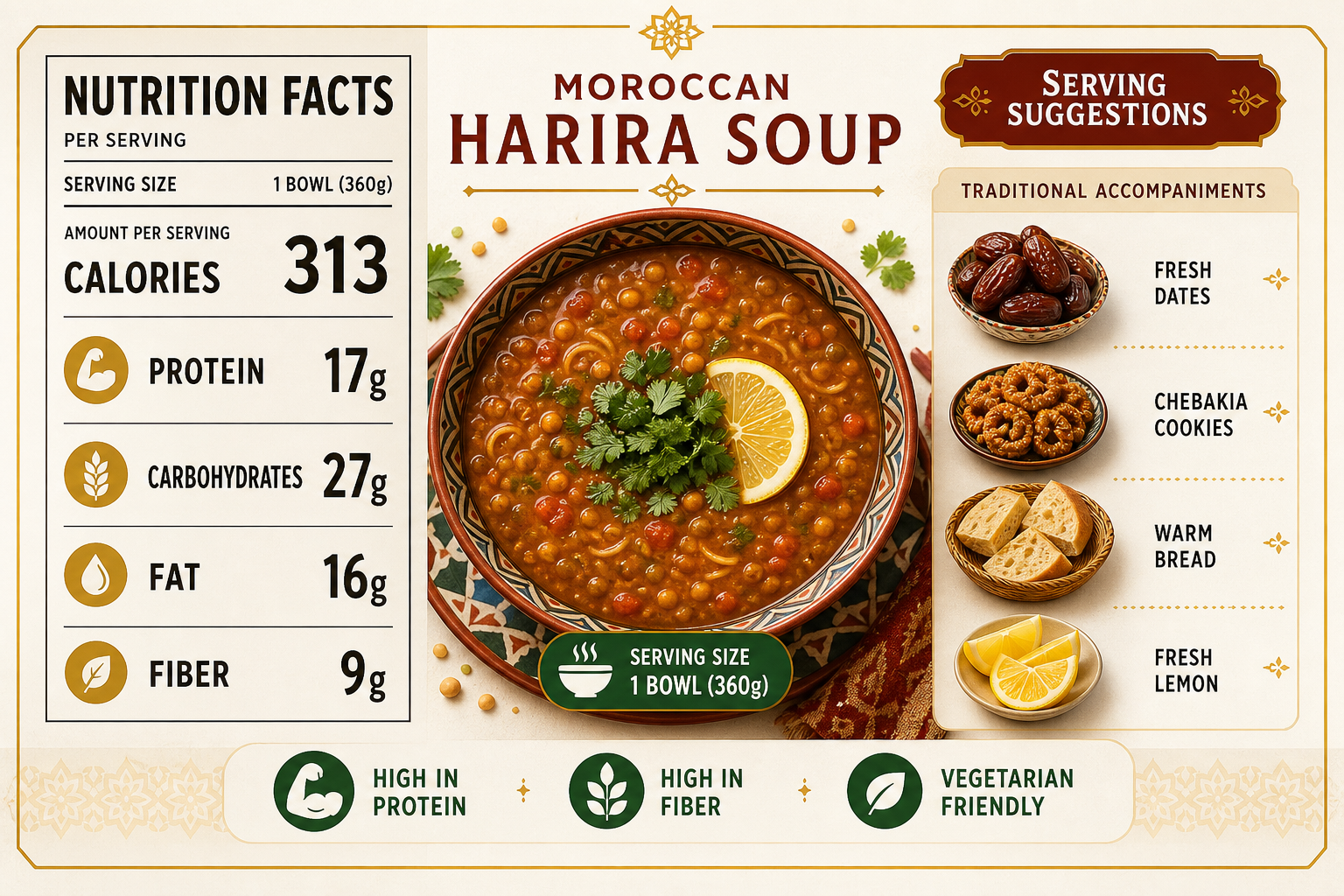
Harira is highly nutritious and loaded with legumes. Per serving (approximately 1 cup):
- Calories: ~313
- Protein: ~17g (primarily from chickpeas and lentils)
- Carbohydrates: ~27g
- Fat: ~16g
- Fiber: ~9g
Storage, Make-Ahead, & Freezing Tips
Storing Harira
In an airtight container, harira keeps well in the fridge for 2-3 days after cooking. The flavors actually deepen as it sits-many cooks find day-two harira tastes even better than the first day.
Freezing for Later
The soup can be made in large batches and portioned out for freezing before thickening it. This is the key: freeze the soup base (all ingredients except the flour-water thickener and final herbs), then thicken it fresh when you reheat.
Why this approach works: The freezing and thawing process can affect the thickener’s texture. Thickening fresh after reheating ensures you get that silky, creamy consistency every time.
Prep-Ahead Strategy
Much of the prep work can be done in advance and the prepped ingredients stored in the freezer for easy cooking later. Dice onions, celery, and tomatoes; puree herbs; prepare your spice blend-all of this can happen days or even weeks ahead. When you’re ready to cook, the actual work is minimal.
Serving & Accompaniments
Harira is traditionally served as a starter or light supper. To complete the Moroccan experience:
- Fresh dates or chebakia: Harira is often accompanied by dates or chebakia (Moroccan sesame cookies).
- Fresh lemon: A squeeze of fresh lemon brightens the soup’s warm, deep flavors.
- Warm bread: Batbout (Moroccan pita bread) or krachel (Moroccan sweet rolls) pair beautifully as a side.
- Fresh herbs: A final garnish of cilantro or parsley leaves adds freshness and visual appeal.
During Ramadan, harira is served immediately after sunset as the first food to break the fast-the warm, nourishing broth gently refuels the body before the main meal to follow.
Common Mistakes & How to Avoid Them
Over-thickening the Soup
Adding too much flour paste creates a gluey, overly dense soup. The goal is silky and creamy, not paste-like. Add the tedouira gradually, tasting as you go. You can always add more; you can’t remove it once it’s in.
Rushed Cooking
While a pressure cooker is efficient, the traditional stovetop method allows flavors to meld and deepen. If you have the time, simmer for the full 60-90 minutes. The result is noticeably richer.
Skipping the Spice Bloom
Blooming your spices in oil before adding broth prevents harsh, powdery flavors and allows the oils in the spices to fully express themselves. This 1-2 minute step transforms the flavor profile.
Using Stale Spices
Harira’s character depends heavily on the warmth and aromatic quality of spices like ginger, turmeric, and cinnamon. Spices lose potency over time. If your spices are more than 6 months old, replace them.
Overcooking the Garnish
Fresh cilantro and parsley should be added near the end of cooking to retain their bright, fresh flavor and color. Adding them too early results in muted, drab-looking greens.
Why Moroccan Harira Matters
Authentic moroccan harira soup represents something deeper than a recipe-it’s a dish of cultural significance, made the same way in humble homes and Michelin-starred restaurants alike. Travelers who’ve spent weeks in Morocco consistently report that a well-made harira brings them back to their time there-the warmth, the hospitality, the fundamental comfort of this beloved soup.
When you make harira at home, you’re not just following a recipe. You’re participating in a centuries-old Moroccan tradition. You’re creating something that nourishes both body and soul, that connects you to a culinary heritage that values warmth, generosity, and the simple pleasure of a bowl of soup shared with loved ones.
This is cooking with love and serving with pride-the very heart of what good home cooking is about.
Try ViaFrance for Moroccan Cooking
At ViaFrance, we believe in cooking with love and serving with pride. Whether you’re exploring authentic Moroccan cuisine or discovering new ways to work with quality ingredients, our collection of recipes and cooking guides will inspire your kitchen adventures. From traditional harira to contemporary Moroccan-inspired dishes, we’re here to help you cook confidently and share meals that matter.
Sources
- Taste of Maroc – Moroccan Harira Recipe
- Hungry Paprikas – Authentic Moroccan Harira Soup
- My Moorish Plate – How to Make Moroccan Harira
- Moroccan Zest – Harira Soup Recipe
Frequently Asked Questions
Is moroccan harira soup vegetarian?
Yes, harira can be made completely vegetarian. Simply omit the meat and use vegetable broth instead of meat stock. The lentils and chickpeas provide ample protein-roughly 17g per serving-so the soup remains hearty and satisfying without any animal products.
How long does moroccan harira soup keep in the fridge?
Harira lasts 2-3 days in an airtight container in the fridge. For longer storage, freeze portions before thickening it (leave out the flour-and-water mixture until you reheat). When reheating from frozen, add fresh vermicelli or rice and the thickener at that time for best texture.
Can I use canned chickpeas and lentils instead of dried?
Absolutely. Canned chickpeas and lentils work well in harira. Use about 1.5 cups drained canned chickpeas and 1 cup drained canned lentils. Since they’re already tender, add them in the final 10-15 minutes of cooking to avoid mushiness. Reduce the total cooking time accordingly.
What’s the difference between harira and other Moroccan soups?
Harira is distinct for its silky, creamy texture thickened with a tedouira (flour-water mixture) and its signature warming spice blend of ginger, turmeric, and cinnamon. Other Moroccan soups like chorba are brothier. The name “harira” comes from the Arabic word for silk, referring to that characteristic silky mouthfeel.
When is the best time to eat moroccan harira soup?
While harira is available year-round, it’s traditionally eaten during Ramadan as the first food to break the fast (iftar). The warm, nourishing soup gently refuels the body after a day of fasting. However, many Moroccan families enjoy it regularly throughout the year, especially during cooler months, served as a starter or light supper.