Béarnaise sauce doesn’t have to be intimidating. Learn the foolproof technique – from the tarragon reduction to the perfect emulsification – that produces silky, restaurant-worthy results every time.
May 29, 2026 · 11 min read
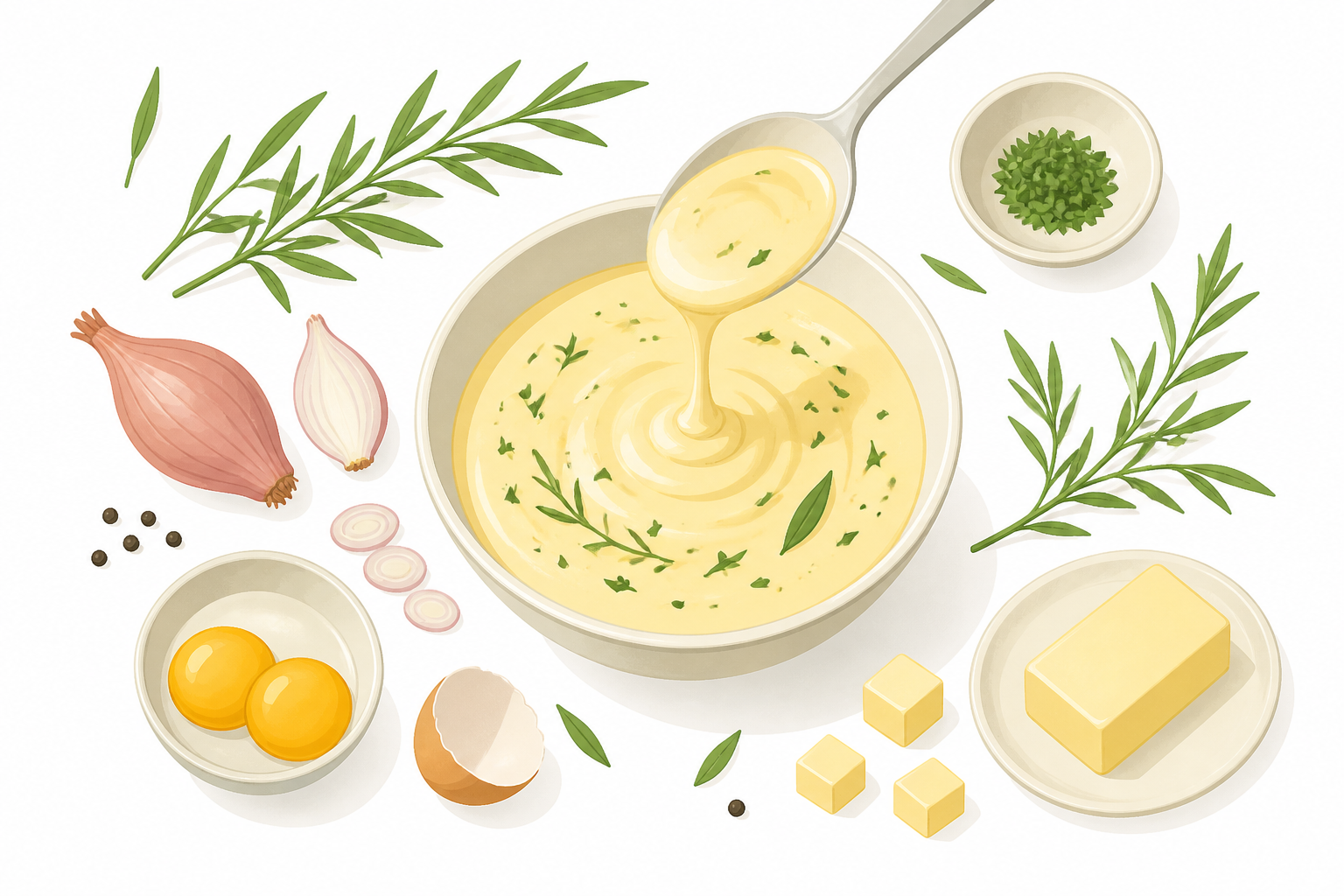
Béarnaise sauce has a reputation that’s slightly undeserved. Ask most home cooks about it and they’ll tell you it’s “the hard one” – the sauce that chefs make and mortals admire from across the restaurant. They’re not entirely wrong that it requires care, but they’re very wrong about who can pull it off.
We’ve made béarnaise dozens of times, including some genuinely spectacular failures in the early days. What we’ve learned is that the sauce doesn’t punish ambition – it punishes impatience. Get the temperature steady, add the butter slowly, use fresh tarragon, and you’ll have something that tastes like it arrived from a Paris brasserie kitchen. Rush any of those steps and you’ll have expensive scrambled eggs.
Here’s everything we know.
TL;DR
Béarnaise sauce is an emulsified butter sauce flavored with a tarragon-shallot reduction. The two-step process – reduction first, then emulsification with hot butter – takes about 30 minutes. The most reliable method uses an immersion blender rather than a double boiler, which eliminates temperature anxiety entirely. Fresh tarragon is non-negotiable. If the sauce breaks, it’s almost always fixable with a new egg yolk and patience.
What is sauce béarnaise?
Béarnaise is a classic French emulsified butter sauce – one of the five French “mother sauces” in the hollandaise family – built on egg yolks, melted butter, and a reduction of white wine, white wine vinegar, shallots, and tarragon. The result is a rich, tangy, velvety sauce with a distinctive herby note that’s a world apart from anything that comes out of a jar.
It was allegedly invented by chef Jean-Louis-François Collinet and served at the 1836 opening of Le Pavillon Henri IV, a restaurant at Saint-Germain-en-Laye – a former residence of Henry IV of France. The sauce takes its name from the province of Béarn in southwestern France, Henry IV’s birthplace, adjusted to the feminine “béarnaise” to match the French word for sauce. It became common in U.S. cookbooks after World War II and remains a staple in American steakhouses today.
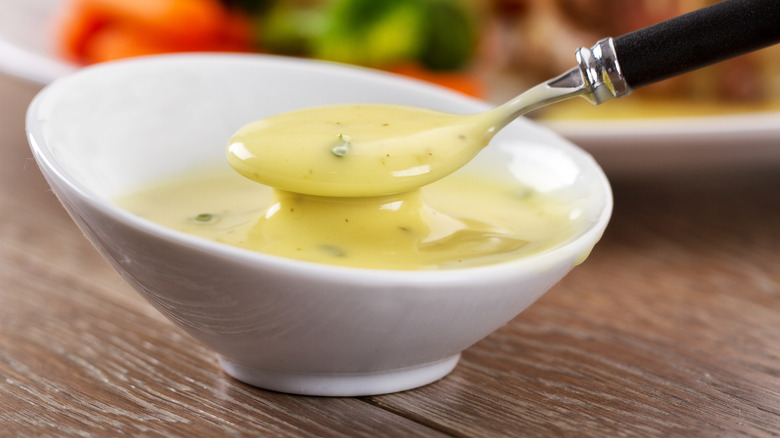
Béarnaise vs hollandaise: what’s the difference?
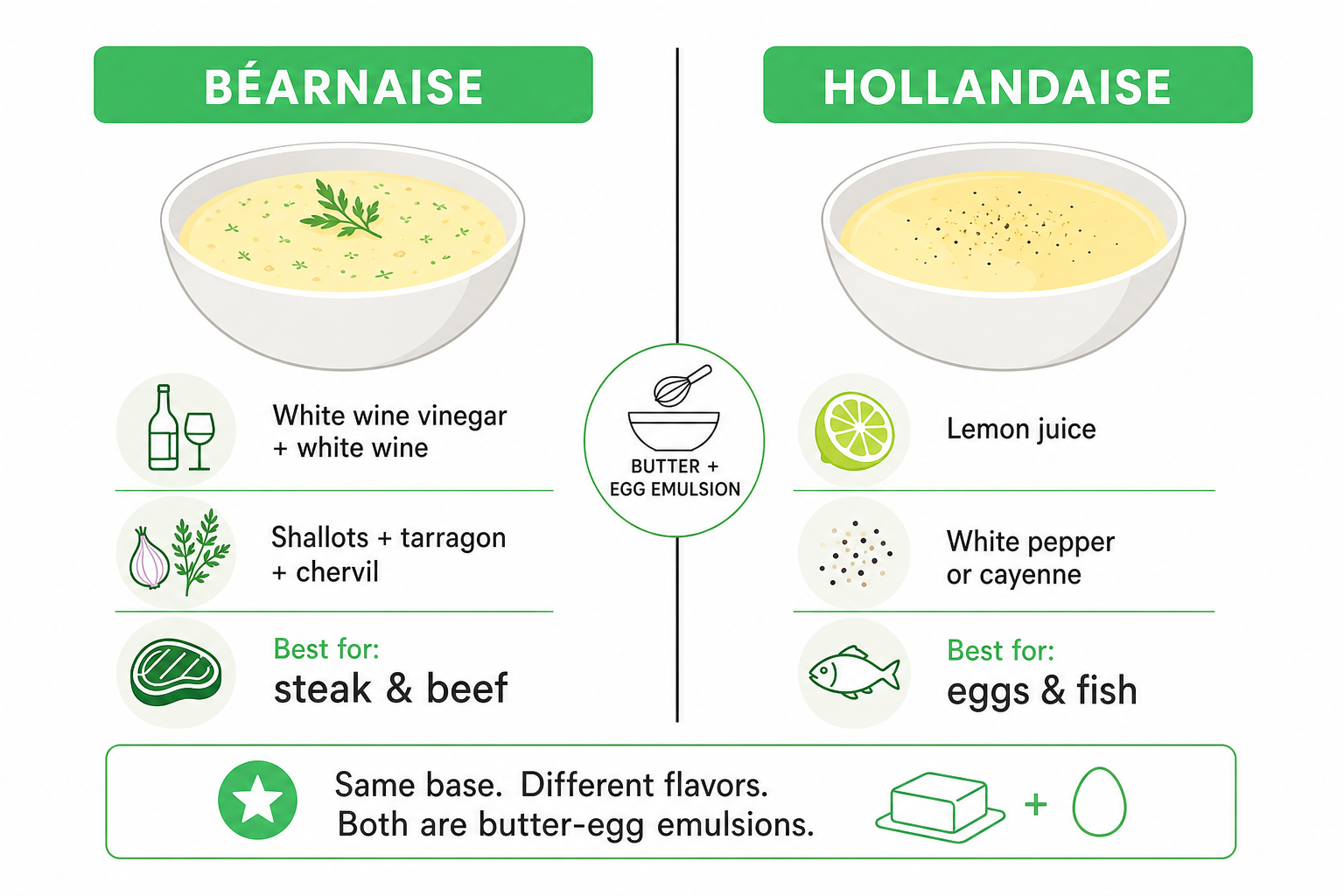
If you’ve ever wondered why your brunch hollandaise and your steakhouse béarnaise taste nothing alike despite being made with the same base technique, the answer is in the flavoring. They’re both butter-egg emulsions – the structure is identical. What changes is everything around it.
| Béarnaise | Hollandaise | |
|---|---|---|
| Acidity source | White wine vinegar + white wine reduction | Lemon juice |
| Herbs & aromatics | Tarragon, chervil, shallots, black pepper | White pepper or cayenne |
| Flavor profile | Tangy, herby, complex | Bright, lemony, clean |
| Best with | Steak, beef, rich proteins | Eggs, fish, asparagus |
The anise note of fresh tarragon is what makes béarnaise immediately recognizable. Swap it for lemon juice and you have hollandaise. Add a tomato reduction and you have sauce Choron. The family tree is extensive once you understand the base technique.
What you need
Ingredients
For the reduction (flavor base):
- 1/4 cup dry white wine (pinot grigio or sauvignon blanc work well)
- 1/4 cup white wine vinegar
- 1 small shallot, finely chopped
- 2-4 sprigs fresh tarragon – stems for the reduction, leaves chopped for finishing
- 1 sprig fresh chervil (optional – stems for reduction, leaves for finishing)
- 1/2 teaspoon whole black peppercorns, lightly crushed
For the emulsion:
- 3 large egg yolks, at room temperature
- 10-12 tablespoons (1 1/4 to 1 1/2 sticks) unsalted butter
- 1/2 teaspoon kosher salt
- 1 teaspoon lemon juice (optional, not traditional but brightens things up)
Equipment: A small saucepan, a fine-mesh strainer, and either an immersion blender with a tall narrow container or a standard blender. That’s genuinely it.
One note on the butter: you don’t need to clarify it. The milk solids in whole butter don’t negatively impact texture or stability, and the difference in final flavor is subtle enough that we’d save clarifying for days when you have nothing better to do. Just melt unsalted butter until it’s hot and foamy, then let the foam subside.
The technique
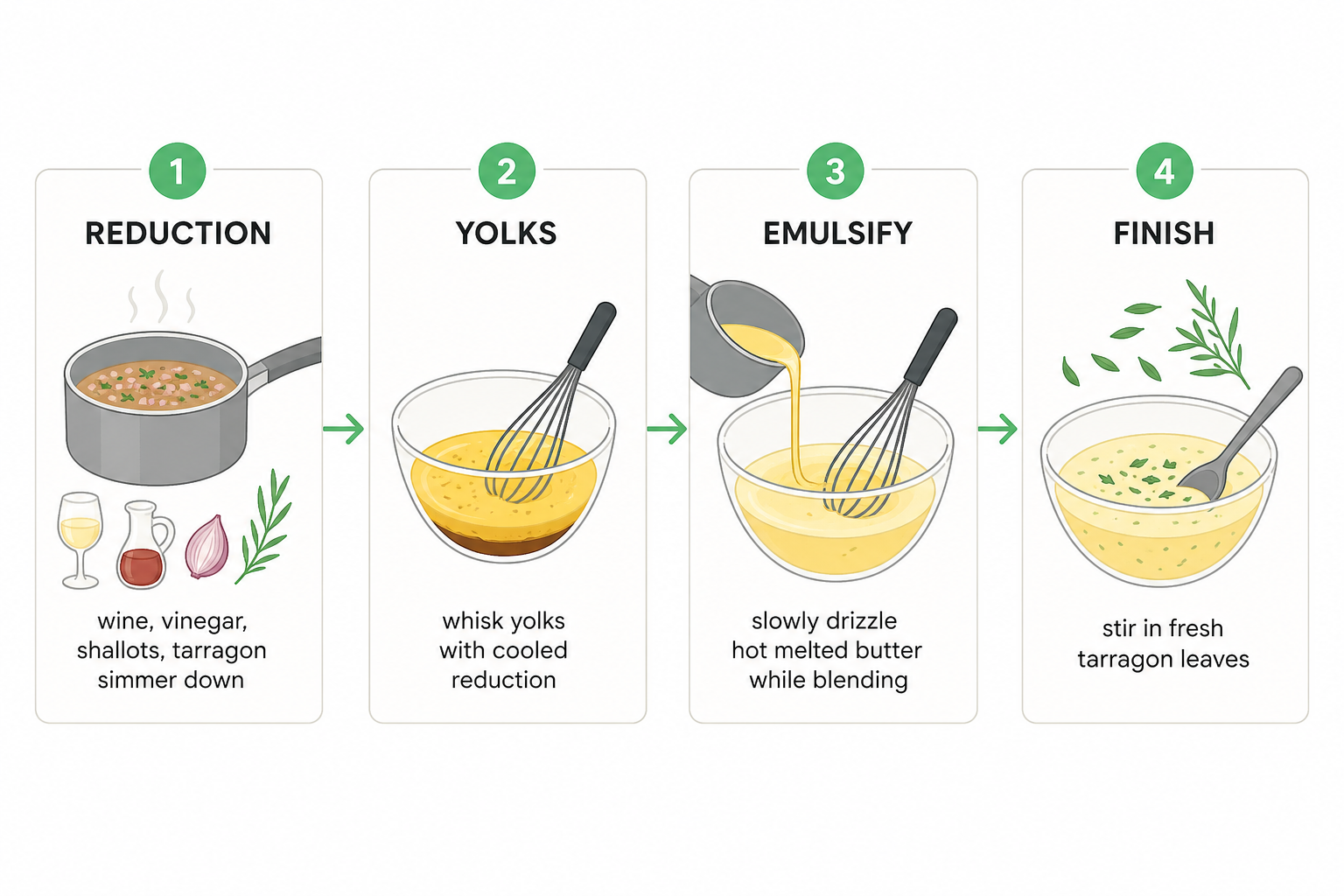
The whole process breaks into four stages. Understand each one and nothing will surprise you.
Step 1: Make the reduction
Combine the white wine, white wine vinegar, shallot, tarragon stems (not the leaves – save those for the end), chervil stems, and peppercorns in a small saucepan. Bring to a simmer over medium-high heat, then reduce the heat and simmer gently for about 15 minutes until the liquid reduces to roughly 1 1/2 tablespoons. Strain through a fine-mesh strainer, pressing on the solids to squeeze out every bit of flavor, and let it cool for 5 minutes.
This reduction is where the sauce’s character lives. Don’t rush it and don’t skip the straining – gritty peppercorns in your finished béarnaise is not the restaurant experience you were going for.
Step 2: Combine with egg yolks
Add the cooled reduction to your 3 room-temperature egg yolks and your salt. Ingredients at similar temperatures combine more easily – if your yolks are cold from the fridge, the butter will hit them like a thermal shock and the emulsion becomes significantly harder to form. Give them 20 minutes at room temperature. It’s worth it.
Step 3: Emulsify with hot butter
This is where most home cooks get nervous. There are two reliable methods – and neither involves the traditional double boiler that makes experienced cooks check their thermometers every 30 seconds.
The immersion blender method (our recommendation for home cooks):
Place the yolk-reduction mixture in the bottom of a tall, narrow container – the kind that fits your immersion blender snugly. Melt the butter over medium heat until foaming, then transfer it to a measuring cup or pitcher with a pourable spout. Place the immersion blender at the bottom of the container, turn it on, and slowly pour the hot butter in a thin, steady stream while the blender runs continuously. J. Kenji López-Alt’s foolproof method at Serious Eats proves that “slowly” is doing a lot of work in that sentence – the first few tablespoons need to be genuinely slow. Once the emulsion starts to form and the sauce begins to thicken, you can pick up the pace. The whole emulsification takes about 2 minutes.
The blender method:
Place the yolk mixture in a standard blender. Start on low speed and add the first few tablespoons of hot butter with the machine running. Once those are incorporated, increase to medium speed and stream in the rest of the butter slowly. Blend until the sauce is pale yellow, thickened to a pourable gravy consistency, and smooth.
Both methods bypass the temperature vigilance required by the double boiler – the hot butter itself brings the yolks to the right temperature as it emulsifies.
Step 4: Finish and season
Stir in the finely chopped fresh tarragon leaves and chervil leaves. Taste and adjust salt. If the sauce is thicker than you want, whisk in cool water, 1 tablespoon at a time, until it reaches a consistency that drips off a spoon in a slow ribbon. Serve immediately, or keep warm in a covered container for up to an hour.
The temperature question
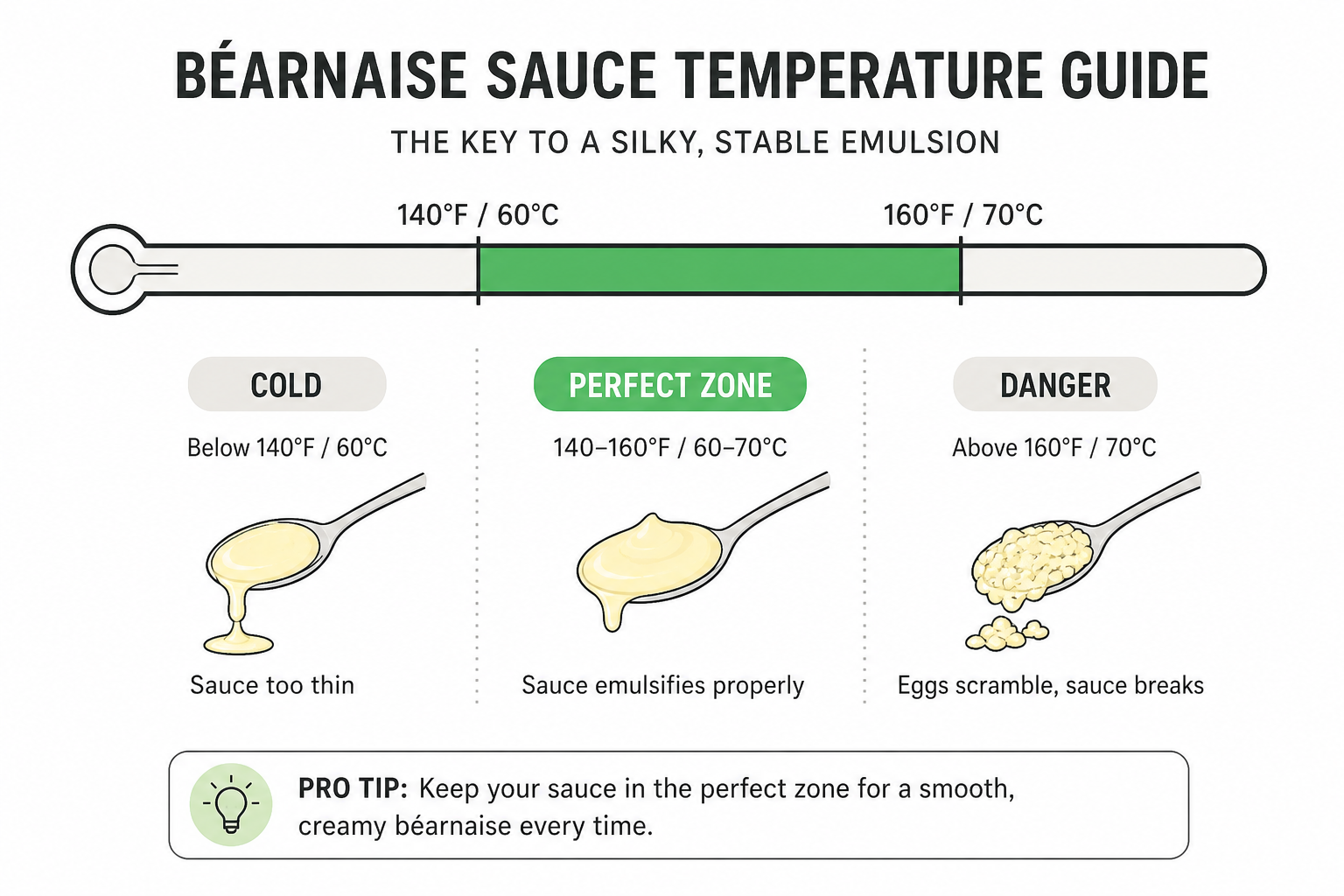
The traditional double boiler method whisks the yolks to a target temperature of 66°C (150°F). This is why it makes home cooks anxious – there’s a narrow window between “properly thickened” and “scrambled.” The immersion blender eliminates this problem because the hot butter (not boiling) naturally brings the yolks into the right temperature range during emulsification.
But if you ever use the double boiler, understanding the temperature zones saves you from disaster.
The critical window is 140-160°F (60-70°C). Below 140°F, the yolks haven’t thickened enough to hold the emulsion. Above 160°F, the egg proteins coagulate and you get grainy, curdled béarnaise that no amount of whisking will fix.
How to fix a broken béarnaise
Breaking a béarnaise sauce doesn’t make you a bad cook – it makes you a cook who added the butter too fast, or got the heat too high, or started with cold yolks. All three are common errors and all three produce the same result: an oily, separated mess that looks like failure.
Here’s what actually works:
For slight separation: Whisk in a teaspoon of warm water to stabilize the emulsion. This works reliably when the sauce has just started to break, before it fully separates.
For a fully broken sauce: Start a new base. Crack one fresh egg yolk into a clean bowl, add a tiny pinch of salt, and add only a few drops of the broken sauce while whisking vigorously. The intact yolk acts as a new emulsifier that gradually absorbs the broken sauce. Once a stable emulsion forms, you can add the rest of the broken sauce in a faster stream.
The blender rescue: If hand-whisking isn’t cutting it, an immersion blender reincorporates the separated ingredients very effectively. Pour the broken sauce over a fresh egg yolk in a tall container and blend from the bottom up.
The key thing home cooks get wrong when their sauce breaks is giving up. A broken béarnaise is almost never unrecoverable.
What makes it actually restaurant-quality
There’s a specific checklist that separates a good home béarnaise from one that tastes like a serious kitchen made it.
A stable, smooth emulsion. The sauce should coat the back of a spoon in a slow ribbon and be velvety, not grainy or streaky with oil. Graininess always means either overcooked eggs or inadequate emulsification.
Fresh tarragon, full stop. Fresh tarragon is non-negotiable – it’s what makes béarnaise béarnaise. Dried tarragon is flat and dusty, and it shows. If you can’t find fresh tarragon, reschedule this project until you can. The community consensus on this is unanimous across forums and professional sources alike.
A properly concentrated reduction. The reduction is doing real work – it’s the flavor scaffold that the butter and yolks coat. A reduction that’s too mild produces béarnaise that’s buttery but inert. A good 15-minute simmer to 1 1/2 tablespoons matters.
Correct seasoning. Béarnaise can absorb a surprising amount of salt given how rich it is. Taste before serving and adjust – an under-seasoned béarnaise will seem flat next to a well-seasoned steak.
What to serve with béarnaise
The classic pairing is beef – specifically steak. Béarnaise and a good ribeye are one of the great synergies in French cooking: the richness of the butter sauce cuts through fat, and the herby reduction provides a counterpoint to the char of the meat. It’s also exceptional alongside Beef Wellington – the pastry, duxelles, and filet all benefit from that tarragon lift.
Beyond the obvious pairings:
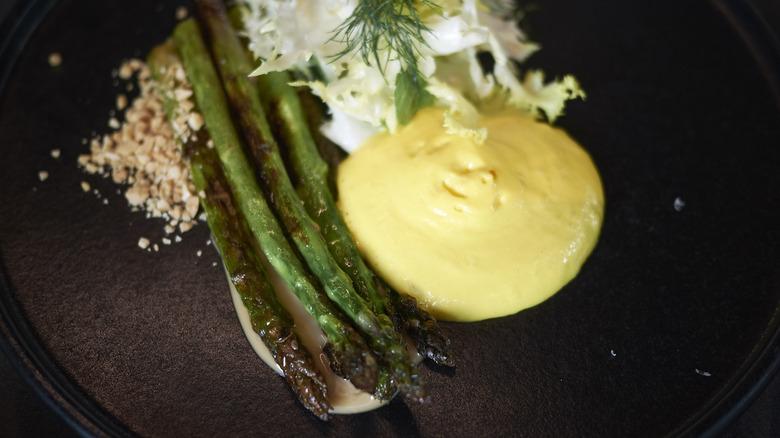
- Roasted asparagus – the sharp, herby sauce is a natural complement to green vegetables, and béarnaise over asparagus is its own classic preparation
- Grilled salmon or swordfish – the vinegar-forward reduction cuts the richness of oily fish beautifully; try it with our garlic butter salmon
- Roasted potatoes – quietly one of the best applications; the starch soaks up the sauce and every bite is indulgent
- A béarnaise eggs Benedict – substitute béarnaise for the traditional hollandaise and you have an upgrade that restaurants charge substantially more for
- Pork chops – both grilled and pan-seared preparations benefit from the herby cut of béarnaise in a way that’s underappreciated
One practical note: béarnaise doesn’t hold indefinitely. It’s a live emulsion and will eventually break if left too long or reheated aggressively. Plan to make it within an hour of serving, or keep it in a covered vessel over barely warm water.
Try Via France
Via France is a French and European cooking blog built for home cooks who want restaurant results without the restaurant complexity. From classic French croissants to Beef Wellington, every recipe balances professional technique with what’s actually achievable in a home kitchen. If this béarnaise post is how you found us, there’s a lot more where this came from.

Bowl of béarnaise: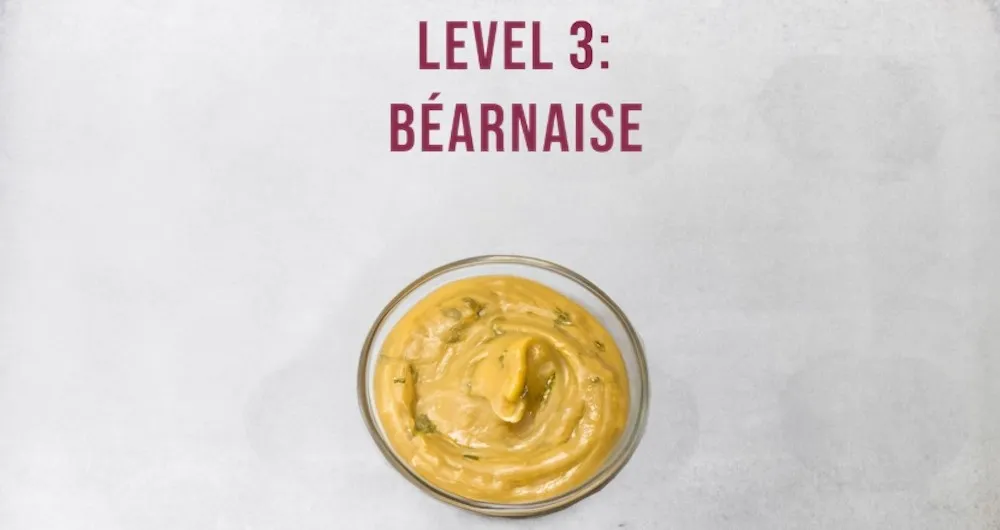
Frequently Asked Questions
Can I make béarnaise sauce ahead of time?
Yes – béarnaise keeps well for up to 1 hour if you leave it in the blender or covered bowl set over barely warm water. For longer storage, refrigerate it for up to 2 days and reheat gently over a bain-marie, whisking constantly. Never microwave it – the heat is uneven and will break the emulsion. You can find more French sauce techniques on Via France.
What’s the difference between béarnaise sauce and hollandaise?
Both are warm emulsified butter sauces built on egg yolks, but their flavor profiles are quite different. Béarnaise uses a reduction of white wine vinegar, white wine, shallots, tarragon, and chervil – giving it a herby, tangy complexity. Hollandaise uses lemon juice and is flavored only with white pepper or cayenne, making it brighter and cleaner. Béarnaise is ideal for steak; hollandaise shines on eggs and fish.
What do I do if my béarnaise sauce breaks?
Don’t panic – a broken béarnaise is almost always recoverable. For slight separation, whisk in 1 teaspoon of warm water. For a fully broken sauce, start a new base with one fresh egg yolk, then add the broken sauce drop by drop while whisking vigorously until the emulsion re-forms, then add the rest more quickly. An immersion blender also works well as a rescue tool.
Do I have to use clarified butter for béarnaise?
No – whole unsalted butter works perfectly well. The Kitchn’s method confirms that the milk solids in regular butter don’t negatively affect texture or stability. Clarified butter produces a slightly lighter, cleaner butter flavour, but the difference is subtle. If you’re short on time, just melt regular unsalted butter and go.
Can I use dried tarragon instead of fresh?
We’d strongly advise against it. Fresh tarragon is non-negotiable in a proper béarnaise – the anise-forward brightness of fresh leaves is what distinguishes the sauce from hollandaise. Dried tarragon is dusty and flat by comparison, and it won’t dissolve cleanly into the finished sauce. If you genuinely can’t find fresh tarragon, fresh chervil or a small amount of fresh basil can approximate the herby note, but neither is quite right.