Nicola potatoes are the waxy champions of the Belgian kitchen. This guide reveals the technical sauté method to achieve a crisp crust and buttery heart every time.
May 10, 2026 · 8 min read
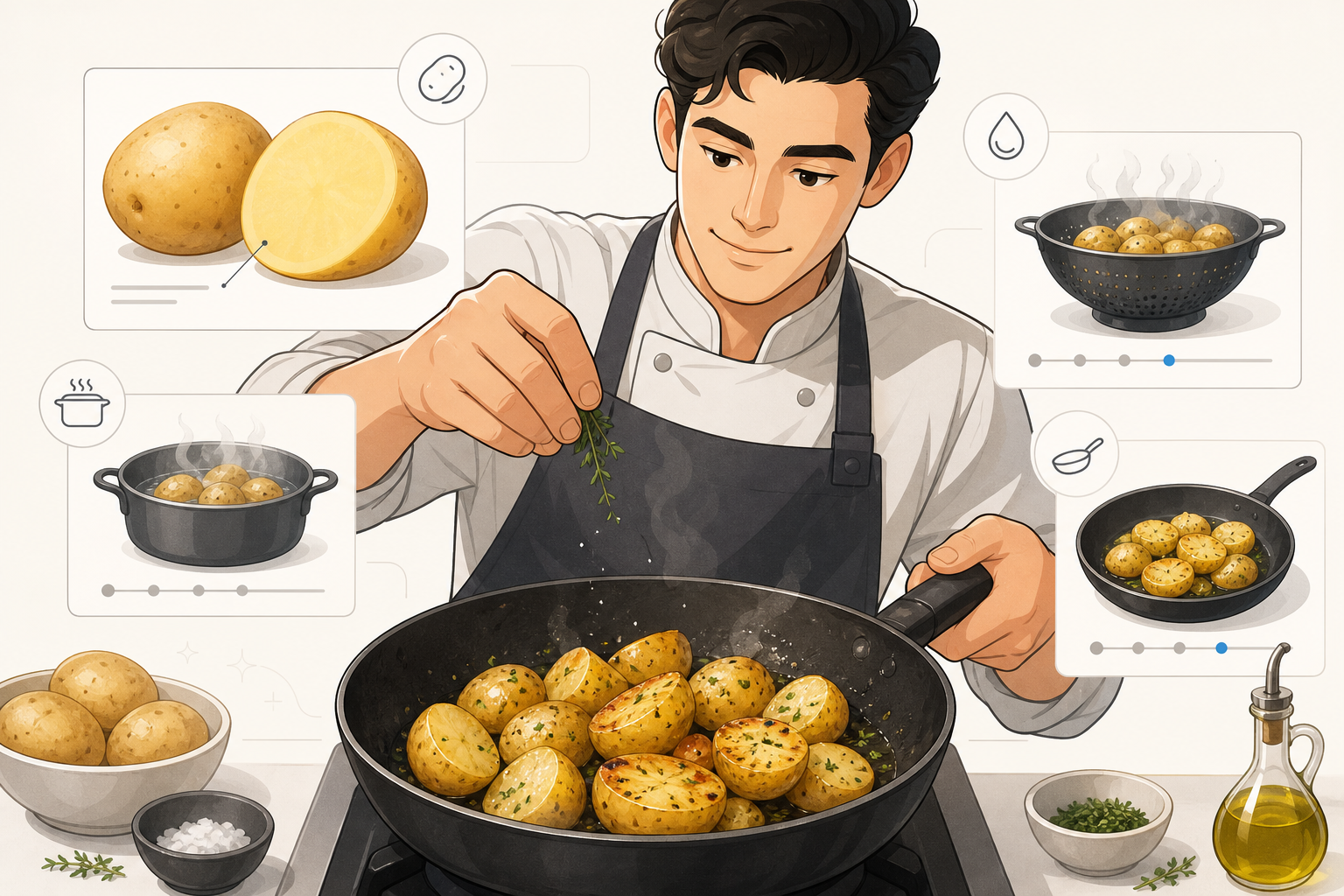
Most home cooks treat the Nicola like a generic spud, leading to broken skins and uneven texture. But this German-bred waxy champion follows a different set of rules. Getting the firm, buttery finish right requires a specific par-boil and sauté sequence that most guides skip entirely. Here’s the technical masterclass for 2026.
If you’ve spent any time in a professional Belgian kitchen, you know that not all potatoes are created equal. The Nicola is a cultivar that demands respect. It’s a tool for precision cooking. In our tests at ViaFrance, we’ve found that the secret lies in managing the potato’s internal structure before it ever touches a hot pan.
Understanding why this potato behaves the way it does is the first step toward culinary mastery. Whether you’re preparing a traditional salad or a crisp side dish, the Nicola offers a reliability that few other varieties can match. Let’s break down the history and the science before we dive into the method.
The Nicola potato: Germany’s waxy gift to the kitchen
The story of the Nicola potato begins in the 1960s, when it was bred in Germany by Dr. Hans-Jurgen. It’s developed with a clear goal in mind: creating a variety that would remain firm and flavorful even after long cooking times. Its excellence was formally recognized when it was named the 2016 German “Potato of the Year”, a testament to its enduring quality in European agriculture. This award’s only given to varieties that show exceptional performance in both the field and the kitchen.
Physically, the Nicola’s easy to spot. It possesses a long oval shape and smooth yellow skin that hides a deep yellow, buttery flesh. Unlike starchy varieties that feel dry or mealy, the Nicola has a waxy texture that feels substantial on the palate. This characteristic has earned it a culinary reputation as the “Type A” firm-cooking standard for chefs across the continent. In the professional world, a “Type A” rating means the potato’s essentially uncrushable during standard boiling, making it the gold standard for potato salads.
When you’re deciding which potato to use, it helps to understand how the Nicola compares to its peers:
- Nicola vs. Charlotte: While both are waxy, the Nicola tends to have a sweeter, nuttier profile that stands up better to aggressive sautéing.
- Nicola vs. Ratte: The Ratte is smaller and often more expensive, but the Nicola provides a more consistent shape for uniform slicing.
- Nicola vs. generic waxy spuds: Most supermarket waxy potatoes lack the depth of flavor that the Nicola’s yellow flesh provides.
If you are looking for a lighter alternative to a heavy potato meal, you might consider pairing your vegetable sides with a Greek salad, though the Nicola usually remains the star of any plate it joins.
Technical specs: The science of “cellular glue” in Nicola potatoes
To master the art of cooking these potatoes, you must understand the chemistry happening inside the pot. The primary reason the Nicola stays firm while others crumble is a polysaccharide called pectin. You can think of pectin as a cellular glue that holds the potato’s cells together. In starchy potatoes, this glue dissolves easily, leading to a fluffy mash as the cells separate. In the Nicola, the pectin is more resilient, allowing it to maintain its structural integrity even at high temperatures.
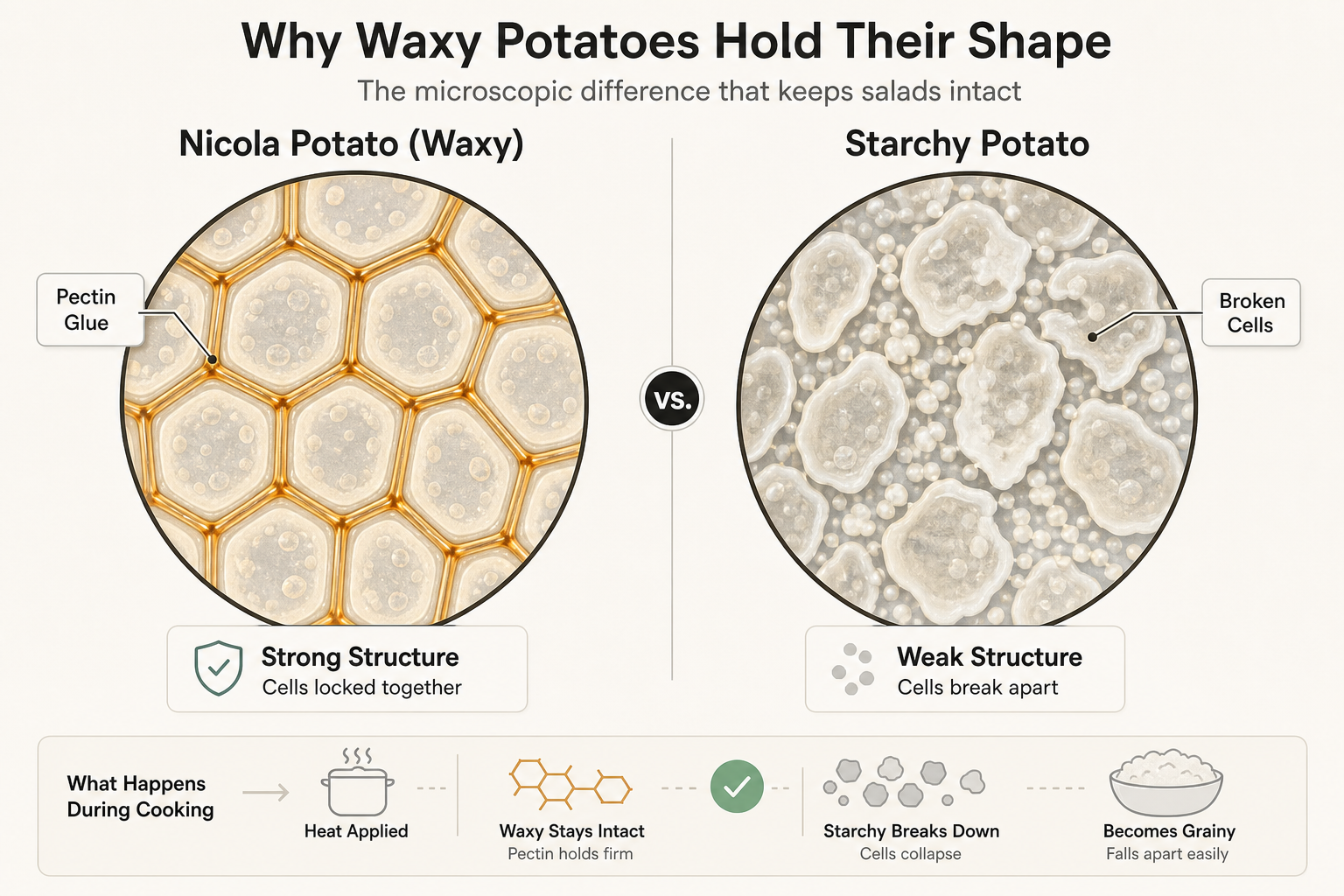
Beyond texture, there’s a nutritional benefit to this structural density. The Nicola’s often cited as a low-GI choice, meaning it provides more sustained energy compared to high-starch varieties. This makes it an excellent option for those looking to maintain steady blood sugar levels without sacrificing the comfort of a good potato dish.
We can also use chemistry to our advantage during the cooking process. One of the most effective tricks in a chef’s arsenal is pH engineering. By adding a splash of vinegar or a generous amount of salt to the water, you can manipulate the potato’s structure. Acidic environments help strengthen the pectin bonds, ensuring that the edges of your potato slices stay sharp and clean during the sauté phase.
How to cook Nicola potatoes: The technical sauté method
The sauté method is where the Nicola truly shines. While many guides suggest roasting or simple boiling, we believe that the hybrid sauté provides the best contrast between a crisp exterior and a buttery heart. For this method, you will need:
- 1kg Nicola potatoes (unpeeled)
- 50g Belgian butter or duck fat
- 2 tablespoons of sea salt
- Fresh aromatics (thyme or rosemary)
- A dash of white wine vinegar
The following steps are designed to ensure that you get the most out of every spud.
Step 1: The cold start par-boil
The most common mistake people make is dropping potatoes into already boiling water. To ensure even starch gelatinization, you must start with cold, salted water. This allows the heat to penetrate the potato gradually, cooking the center at the same rate as the exterior.
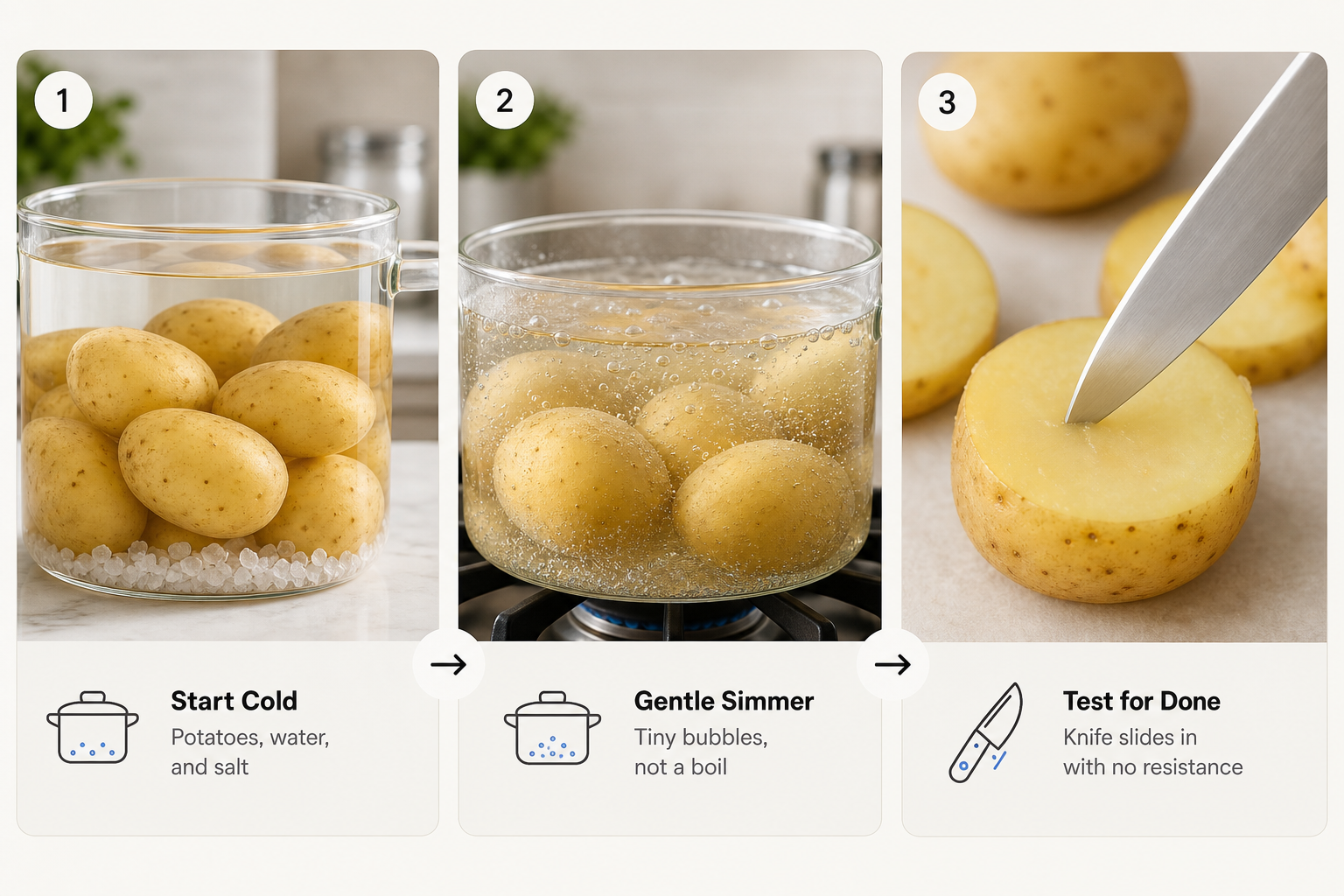
Once the water reaches a boil, reduce the heat to a “Gentle Smile” simmer. This technique, which involves the water barely moving with small bubbles, should be maintained for 15 to 20 minutes. You are not looking to cook the potato fully at this stage; you want it to be “knife-tender,” where a blade enters with slight resistance.
Step 2: Steam drying and precision slicing
Don’t move to the pan immediately after draining. The importance of steam drying can’t be overstated. By letting the potatoes sit in the colander for five minutes, you allow surface moisture to evaporate. If the potatoes are wet when they hit the oil, they’ll steam instead of sear, resulting in a soggy finish.
Once dry, use a sharp knife for precision slicing. Aim for 1cm thick rounds. This thickness is the sweet spot: it provides enough surface area for the Maillard reaction (browning) while keeping the center thick enough to remain buttery.
Step 3: The high-precision sauté
Now comes the heat. For a true Belgian profile, Belgian butter or duck fat is essential. Duck fat has a higher smoke point and adds a savory depth that vegetable oils simply can’t match. Heat your fat in a wide skillet over medium-high heat.
Place the slices in the pan, ensuring you don’t crowd them. Sauté until a golden, glass-like crust forms on each side. This usually takes 4 to 6 minutes per side. Avoid the urge to flip them constantly; let the crust build before you disturb the potato.
Common mistakes: How to avoid “potato glue”
Even with the best intentions, things can go wrong. Here are the three most common hurdles we see:
| Mistake | Result | Fix |
|---|---|---|
| Over-boiling | The waxy starch turns to mush | Use a timer and the “Gentle Smile” simmer |
| Crowding the pan | The potatoes steam instead of searing | Sauté in batches to maintain high heat |
| Peeling before boiling | Loss of flavor and nutrients | Boil with skins on and peel (if desired) after drying |
If you follow these rules, you’ll avoid the dreaded “potato glue” texture that happens when starch granules rupture prematurely.
Mastering the Belgian finish
To elevate your dish to a restaurant-quality Belgian finish, you need to consider the final seasoning. We recommend a mix of finely diced shallots, fresh dill, and a dash of white wine vinegar tossed with the potatoes while they’re still hot. This allows the acidity to cut through the richness of the butter.
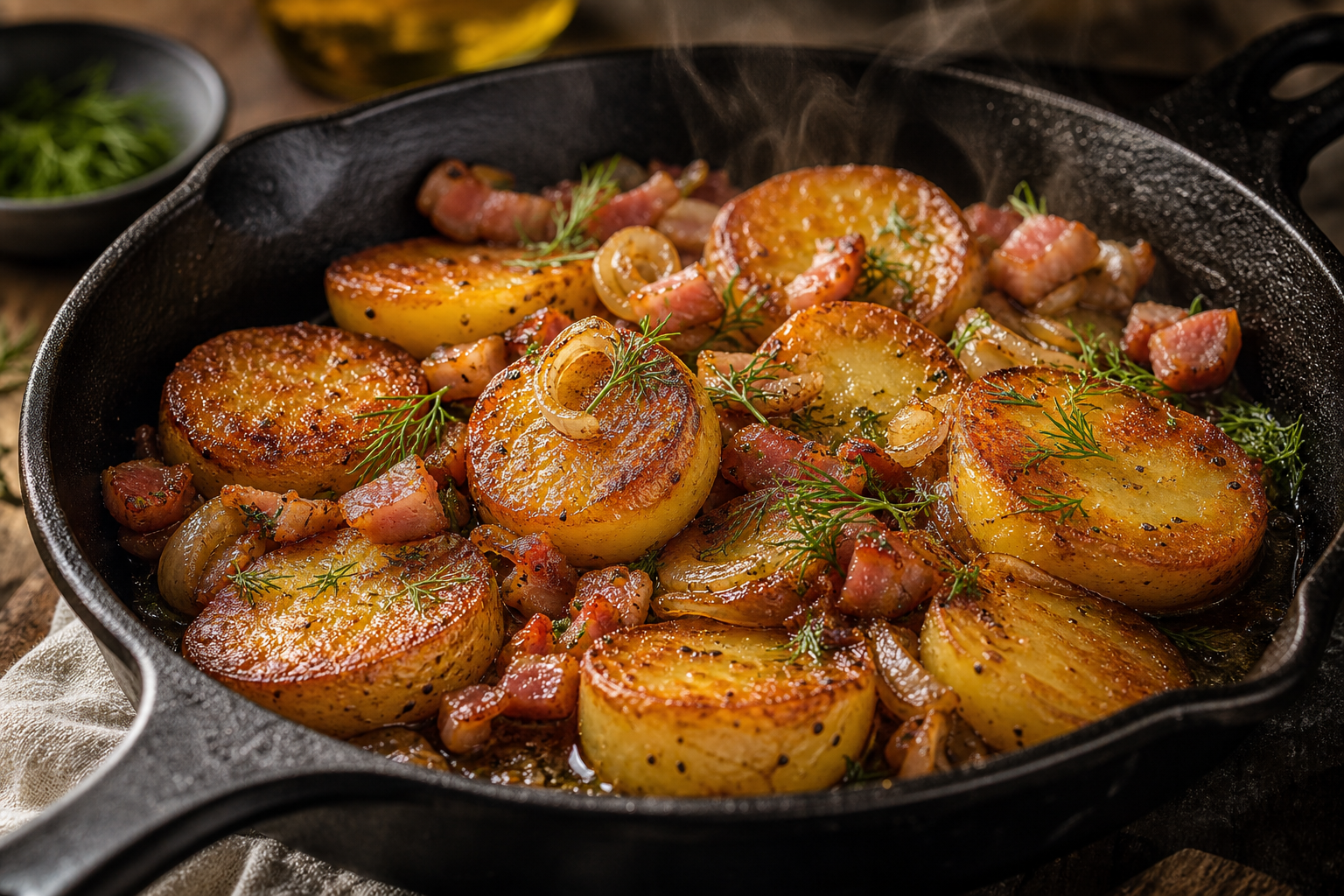
At ViaFrance, we believe that the best meals are built on these technical foundations. You can pair these perfectly sautéed Nicola potatoes with our ribeye steaks with mushroom sauce for a classic steak-frites variation. Alternatively, they work beautifully alongside a parmesan crusted chicken with creamy garlic sauce for a lighter but equally satisfying dinner.
Bottom line? The Nicola is a potato for the patient cook. It rewards those who take the time to understand its structure and follow the technical steps. Once you master the cold start and the precision sauté, you’ll never go back to generic roasting again.
Frequently Asked Questions
What is the best way to ensure firmness when cooking Nicola potatoes?
The best way to maintain firmness is to use the ‘cold start’ method and add a splash of vinegar to the boiling water. This strengthens the pectin bonds, which act as a cellular glue to hold the potato together.
Can I use oil instead of butter in a pan?
You can use oil, but for the best flavor and texture, we recommend duck fat or Belgian butter. Duck fat has a high smoke point that allows for a crisper crust, while butter provides the classic nutty flavor that complements the Nicola variety.
Why do my potatoes turn mushy during the process?
Mushiness usually happens because of over-boiling. Ensure you use a gentle simmer rather than a rolling boil and remove the potatoes from the heat when they are just knife-tender, as they will continue to cook in the sauté pan.
Do I need to peel them before I start?
It is better to boil them with the skins on. This preserves the nutrients and deepens the flavor. You can easily rub the skins off after the steam-drying phase if you prefer a skinless finish, though the skin adds a nice texture to the sauté.
How thick should I slice them for a successful result?
We recommend 1cm thick rounds. This thickness provides the perfect balance: it is thin enough to get a deep golden crust on both sides but thick enough that the center remains creamy and buttery.
Is it possible to bake them instead of using the sauté method?
Yes, you can bake them, but the sauté method described here is the best way to achieve the signature Belgian crispness. If you do bake them, ensure you still par-boil them first to jumpstart the interior cooking.
What aromatics work best for the final seasoning?
Fresh rosemary, thyme, and garlic are the classic choices. Adding them to the pan in the final two minutes of sautéing allows the fats to carry those herbal notes directly into the potato’s crust.