Nine delicious vegan pasta recipes that prove you don’t need cashews or cream. From pasta water emulsification to roasted vegetable sauces, master the techniques that make vegan pasta taste like you spent hours on it.
May 30, 2026 · 12 min read
TL;DR
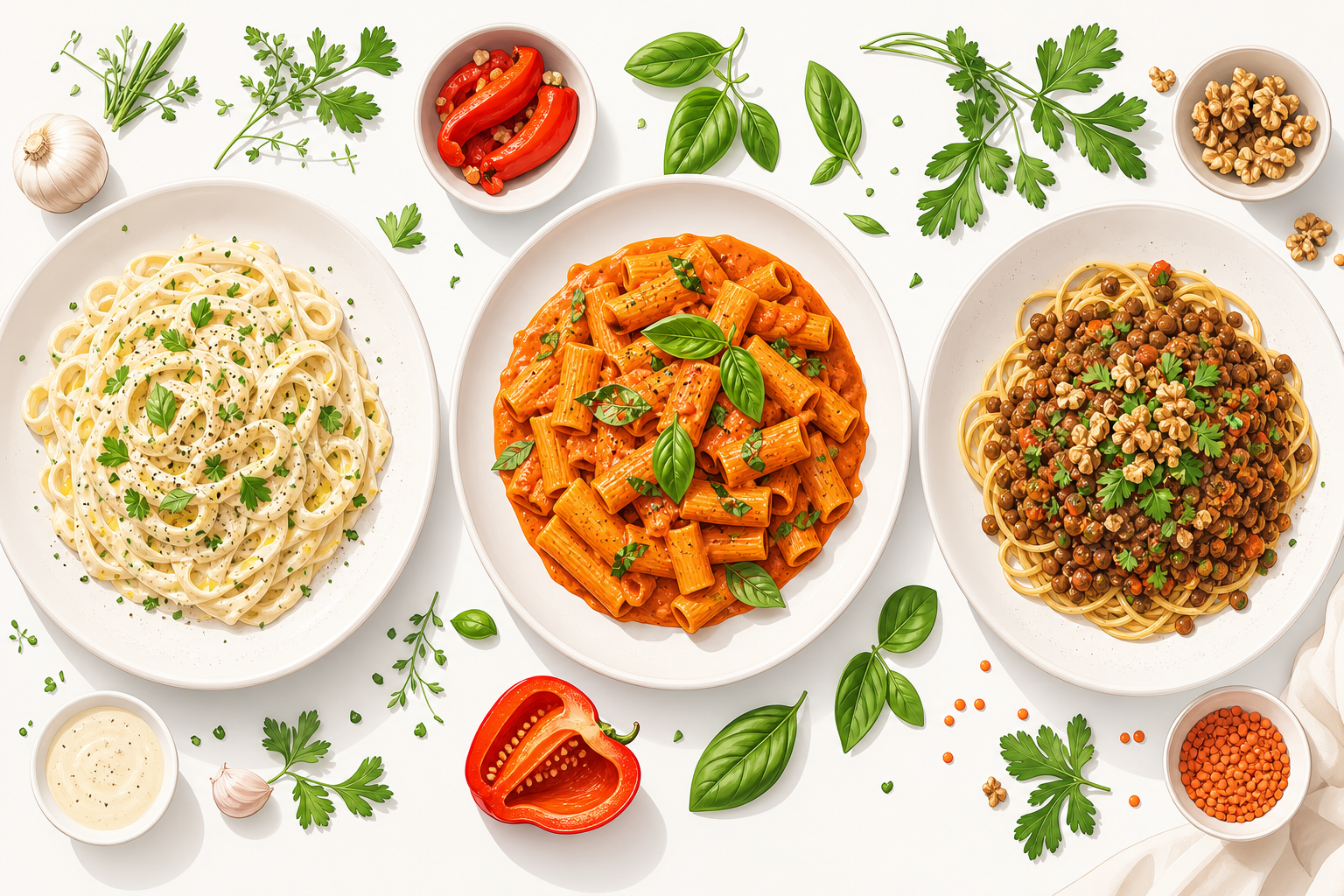
You don’t need cashews or dairy cream to make vegan pasta taste indulgent. The secret is technique: pasta water emulsification creates silky coatings through starch and fat, while plant-based milks make proper béchamel sauces, and roasted vegetables concentrate natural sweetness into rich bases. These nine recipes use ingredients most home cooks already have, take 15–45 minutes, and taste like you spent all day on them. Start with aglio e olio or lentil ragù if you want fast wins; try the Alfredo if you want to impress.
Recipe 1: Classic Aglio e Olio – The 15-Minute Foundation
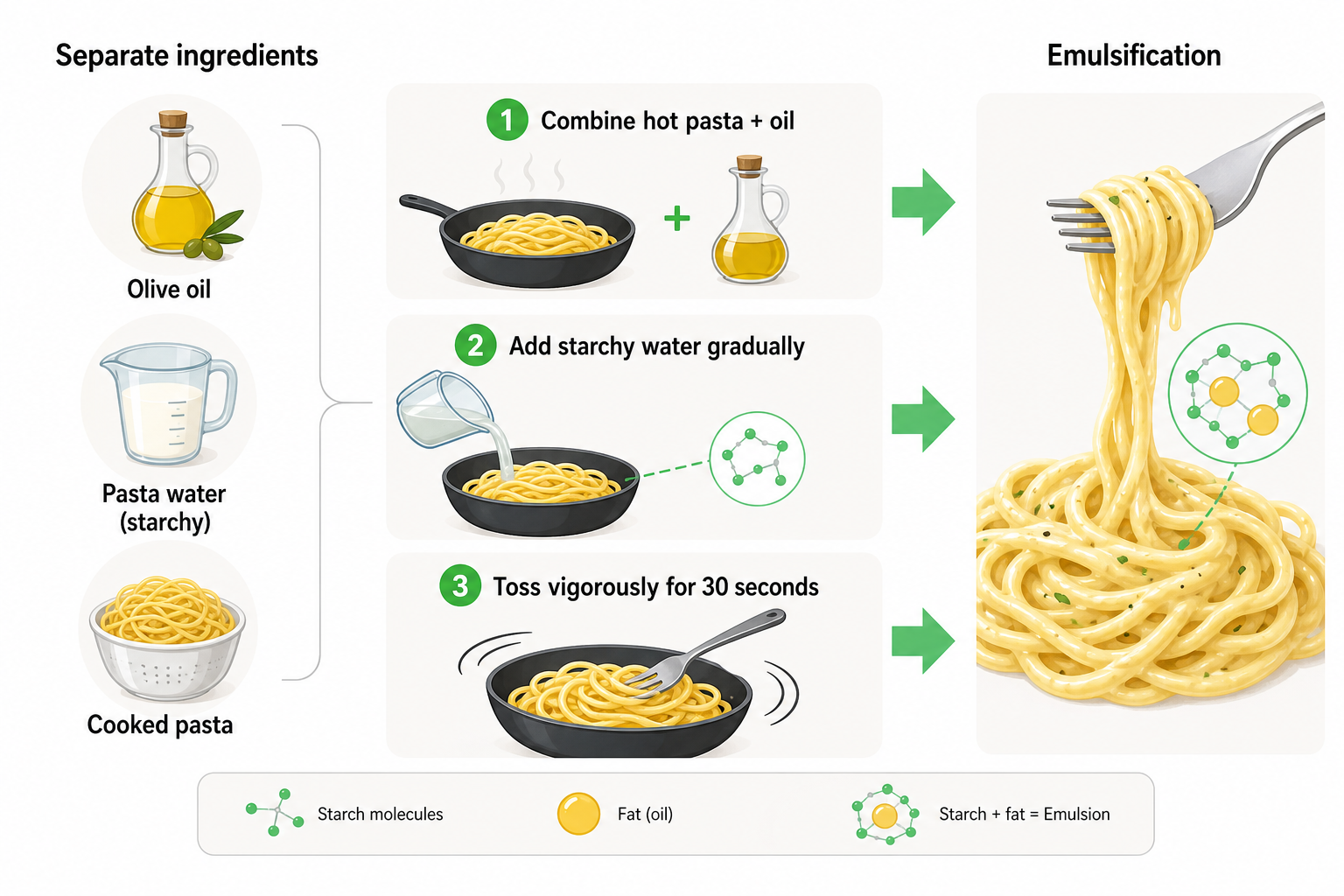
Why it matters: This is the technique that changed how I think about vegan pasta. No cream needed – just garlic, olive oil, pasta water, and pasta. The starch in the cooking water emulsifies with the oil, creating a silky coating that clings to every strand.
The science: As pasta cooks, it releases starch into the water. When you toss hot pasta with hot olive oil and pasta water, the starch binds the fat and water together into an emulsion. The result feels creamy without any dairy or cashews.
Ingredients (serves 4):
- 1 lb spaghetti or linguine
- ⅓ cup high-quality extra virgin olive oil
- 6–8 garlic cloves, thinly sliced (not minced)
- ½ tsp red pepper flakes
- ¼ cup fresh parsley, chopped
- Salt and black pepper
- Zest of ½ lemon (optional but transforms it)
Method:
- Reserve 1 cup of pasta water before draining.
- In a large skillet, warm olive oil over medium heat.
- Add sliced garlic and red pepper flakes; cook 2–3 minutes until garlic is golden and fragrant (don’t brown it).
- Add hot pasta directly to the skillet with tongs.
- Toss vigorously for 30 seconds.
- Add pasta water slowly (2–3 tablespoons at a time) while tossing constantly to create a light, silky coating.
- Stir in fresh parsley, salt, pepper, and lemon zest.
- Serve immediately – this sauce is best eaten right away.
Pro tips: Keep the garlic sliced rather than minced so you can easily remove pieces if they start to brown, and the slices distribute more evenly. Don’t skip the vigorous tossing – that’s where the emulsion happens. The sauce will thicken slightly as it cools, so aim for slightly looser than you think you want.
Variations: Add sautéed mushrooms, white beans for protein, fresh arugula in the last minute (it wilts from the heat), or capers and olives for a briny edge.
Recipe 2: Oat Milk Alfredo – Rich Without the Dairy
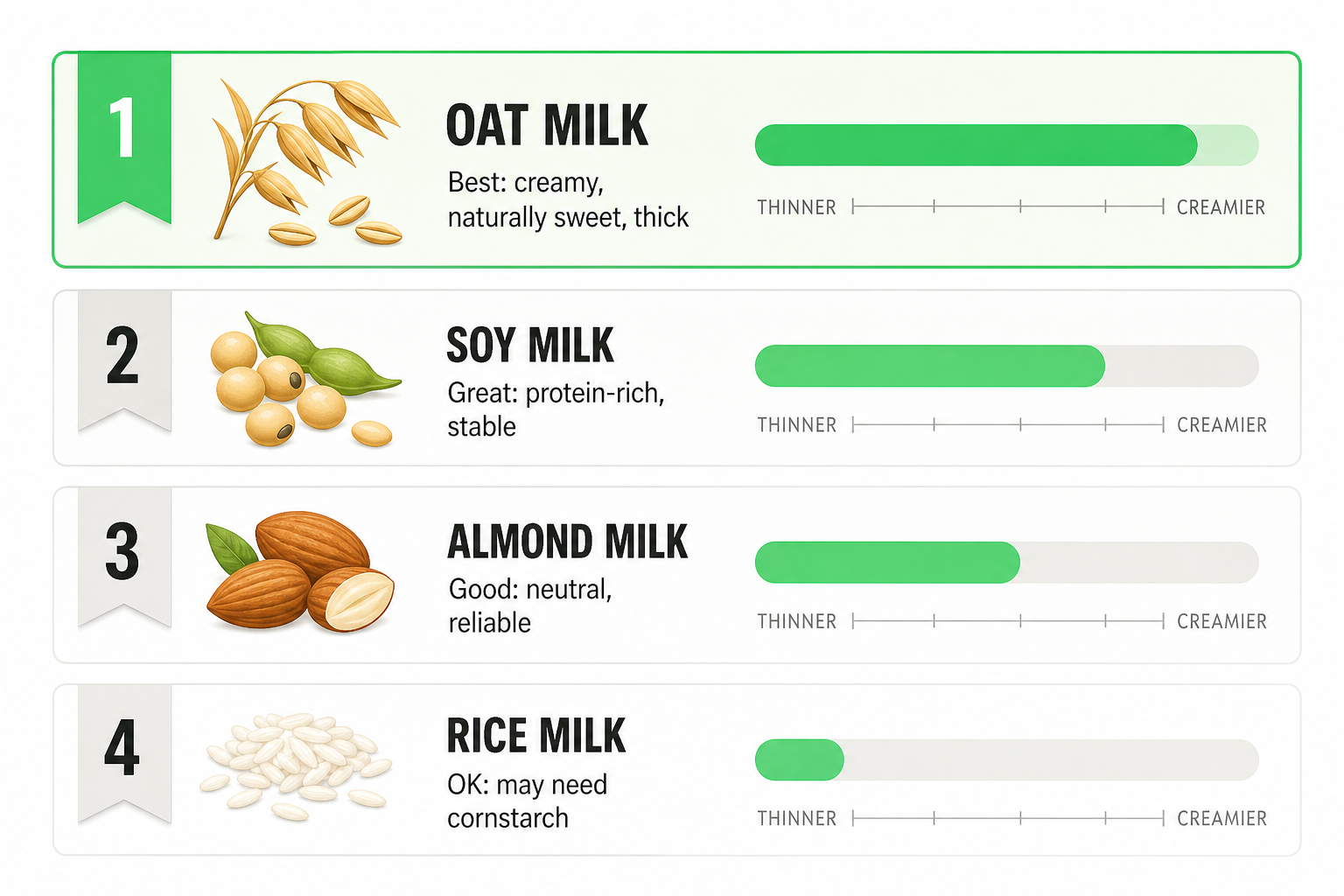
Why it works: Oat milk is naturally creamy and thick, unlike almond or soy milk which can taste thin. This sauce tastes legitimately luxurious, and nobody will guess it’s plant-based.
Ingredients (serves 3–4):
- 2 tablespoons olive oil
- 2 tablespoons flour (or cornstarch for gluten-free)
- 2 cups unsweetened oat milk (full-fat preferred)
- 2 garlic cloves, crushed
- 2 tablespoons nutritional yeast
- ½ tablespoon lemon juice
- Salt and black pepper to taste
Method:
- Warm olive oil in a medium pot over medium heat.
- Whisk in flour 1 tablespoon at a time until completely dissolved – it should form a paste within about 1 minute.
- Gradually add oat milk, whisking constantly to prevent lumps.
- Bring to a gentle simmer, stirring occasionally.
- Add crushed garlic, nutritional yeast, lemon juice, salt, and pepper.
- Simmer 5–7 minutes until thickened enough to coat the back of a spoon.
- Toss with hot pasta.
If it’s too thin: Simmer longer, or make a cornstarch slurry by whisking 1 tablespoon cornstarch with 2 tablespoons cold water and adding it gradually while stirring.
If it’s too thick: Thin with a splash of plant milk.
Storage: Store the sauce separately from pasta to prevent sogginess. Keeps 4–5 days in the fridge. This freezes well too – thaw and thin with plant milk when reheating on the stovetop.
Flavor upgrades: Add sautéed mushrooms with garlic, roasted red peppers for a pink sauce twist, or fresh basil and parsley for an Italian herb version.
Recipe 3: Plant Butter Béchamel – The Luxe Version
Why butter matters: Vegan butter adds a rich, salty note that balances the subtle sweetness of plant milk. Combined with olive oil, it creates an exceptional depth that feels genuinely indulgent.
Ingredients (serves 5–6):
- 6 tablespoons vegan butter (Melt or Miyoko’s are excellent)
- 2 tablespoons olive oil
- 6 tablespoons all-purpose flour
- 3 cups unsweetened plant milk (almond or oat)
- ½ teaspoon fresh grated garlic
- 1 cup vegan parmesan (Violife or Trader Joe’s work well)
- ¾ teaspoon salt
- ⅛ teaspoon black pepper
Method:
- Melt vegan butter with olive oil in a medium saucepan over medium heat.
- Add grated garlic and cook 1 minute.
- Whisk in flour 1 tablespoon at a time until fully dissolved.
- Add plant milk 1 cup at a time, whisking constantly to prevent lumps.
- Reduce heat to low and stir until the sauce thickens and coats a spoon.
- Stir in vegan parmesan, salt, and pepper.
- Toss with hot pasta and garnish with fresh basil.
Why this version tastes different: The combination of butter + olive oil creates a sauce that feels restaurant-quality, not “vegan substitute.” The vegan parmesan adds genuine cheese-like depth.
Make it your own: Add sautéed mushrooms, caramelized onions, roasted garlic, fresh thyme, or a pinch of nutmeg for a classic béchamel note.
Recipe 4: Lentil Ragù – Meaty, Protein-Rich, Freezer-Friendly
Why lentil ragù belongs on the table: Red lentils break down into a thick, sauce-like consistency when simmered, creating a genuinely meaty-feeling sauce. This is my pick for weeknight cooking because it’s ready in 15 minutes, freezes for 3 months, and hits 28 grams of protein per serving.
Ingredients (serves 4–6):
- 1 (650 ml) jar tomato sauce (or 3 cups homemade marinara)
- 1½ cups vegetable broth
- 1 cup red lentils (dry)
- ½ cup chopped walnuts (adds meaty texture)
- ¼ cup nutritional yeast
- 2 teaspoons soy sauce or tamari
- 2 teaspoons brown sugar
- 1 teaspoon chili powder
- ¼ teaspoon liquid smoke
- Salt and pepper to taste
Method:
- Combine tomato sauce, vegetable broth, and red lentils in a large skillet.
- Cover and bring to a simmer, stirring occasionally.
- Simmer covered for 10 minutes until lentils are tender and begin breaking down.
- Stir in walnuts, nutritional yeast, soy sauce, brown sugar, chili powder, and liquid smoke.
- Simmer uncovered for 2–3 minutes to combine flavors.
- Taste and adjust seasonings (you might want more salt or a pinch more chili powder).
- Serve over pasta, garnish with vegan parmesan and fresh basil.
Why red lentils: Brown or green lentils stay firm and won’t create the right sauce texture. Red lentils break down into the ragù consistency you want.
Storage: Freezes beautifully for up to 3 months – perfect meal prep.
Level up: Sauté diced onion, garlic, carrot, and celery before adding lentils for deeper flavor. Add mushrooms (cremini, shiitake) sautéed with garlic. Finish with fresh basil or parsley. A tablespoon of balsamic vinegar adds complexity.
Recipe 5: Roasted Red Pepper & Cashew-Free Cream Sauce
Why roasting matters: Roasting concentrates the pepper’s natural sugars, turning them jammy and sweet. Blended with oat milk, they create a luxurious, naturally colored sauce that looks as good as it tastes.
Ingredients (serves 3–4):
- 3 large red bell peppers
- 3 tablespoons olive oil
- 4 garlic cloves
- 1 cup oat milk
- 2 tablespoons nutritional yeast
- 1 tablespoon lemon juice
- ½ teaspoon smoked paprika
- Salt and pepper to taste
- Fresh basil for garnish
Method:
- Cut red peppers in half, remove seeds, and place on a baking sheet skin-side up.
- Drizzle with 2 tablespoons olive oil, sprinkle with salt.
- Roast at 400°F for 30–35 minutes until the skin is charred and the flesh is very tender.
- Let cool slightly, then peel away the skin (it should come off easily).
- Chop roasted peppers and place in a blender with garlic, oat milk, nutritional yeast, lemon juice, smoked paprika, salt, and pepper.
- Blend until smooth and silky.
- Warm the sauce in a pot over low heat.
- Toss with hot pasta and garnish with fresh basil.
Pro tip: If your blender has trouble, add the oat milk gradually until you reach a pourable consistency. Roasted peppers are naturally thick.
Why it’s better than cashew cream: Red peppers bring genuine vegetal sweetness and flavor. The sauce tastes like food, not like a cashew substitute trying to be something it’s not.
Recipe 6: Mushroom & Herb Pasta with Garlic Emulsion
Why mushrooms: Mushrooms add umami depth and a meaty texture that makes this sauce feel substantial. This is the recipe I reach for when I want something that tastes indulgent on a Wednesday night.
Ingredients (serves 4):
- 1 lb cremini or shiitake mushrooms, sliced
- 3 tablespoons olive oil, divided
- 5 garlic cloves, minced
- ½ cup dry white wine (or vegetable broth)
- Reserved pasta water (about ½ cup)
- 2 tablespoons fresh thyme, chopped
- 2 tablespoons fresh parsley, chopped
- Salt and pepper to taste
- Juice of ½ lemon
Method:
- Heat 2 tablespoons olive oil in a large skillet over medium-high heat.
- Add sliced mushrooms and cook 6–8 minutes, stirring occasionally, until golden and any liquid has evaporated.
- Add minced garlic and cook 2 minutes until fragrant.
- Pour in white wine and simmer 2–3 minutes to reduce slightly.
- Add reserved pasta water and fresh thyme; simmer 3–4 minutes.
- Toss in hot pasta directly to the skillet.
- Drizzle with remaining 1 tablespoon olive oil.
- Toss vigorously for 30 seconds to create an emulsion (the pasta starch will help bind everything together).
- Stir in fresh parsley, salt, pepper, and lemon juice.
- Serve immediately.
Why white wine: It adds acidity and complexity. If you don’t cook with wine, use vegetable broth instead – the result is slightly less sharp but still delicious.
Variation: Add a handful of fresh arugula in the last minute (it wilts from the heat), or finish with a sprinkle of vegan parmesan.
Recipe 7: Roasted Carrot & Miso Sauce – Umami Without Soy
Why this combination works: Carrots caramelize into natural sweetness; miso adds savory umami depth. Together, they create a sauce that tastes complex and sophisticated without any cream.
Ingredients (serves 3–4):
- 4 large carrots, chopped into ½-inch pieces
- 2 tablespoons olive oil
- 3 garlic cloves
- 1 cup oat milk
- 1 tablespoon white miso paste
- 1 tablespoon maple syrup
- ½ teaspoon ginger powder
- Salt and pepper to taste
- Fresh cilantro or parsley for garnish
Method:
- Toss carrots with 2 tablespoons olive oil, salt, and pepper.
- Spread on a baking sheet and roast at 400°F for 35–40 minutes until very tender and caramelized, stirring halfway through.
- Transfer roasted carrots to a blender with garlic, oat milk, miso paste, maple syrup, and ginger powder.
- Blend until completely smooth.
- Warm the sauce in a pot over low heat.
- Toss with hot pasta and garnish with fresh cilantro or parsley.
About miso: White miso is mild and slightly sweet – perfect here. It dissolves easily into the sauce and adds depth without being aggressive. This is gentle umami, not salty umami.
Why it matters: This sauce tastes completely different from tomato-based or green-vegetable-based options. It’s warm, subtly sweet, and sophisticated.
Recipe 8: Broccolini & White Bean Aglio e Olio
Why add vegetables: This is aglio e olio upgraded with protein and greens in one dish. The broccolini wilts slightly from the heat, the white beans add creaminess and protein, and everything emulsifies together.
Ingredients (serves 4):
- 1 lb spaghetti or linguine
- ⅓ cup extra virgin olive oil
- 6 garlic cloves, thinly sliced
- 4 cups fresh broccolini, chopped
- 1 can (400 ml) white beans, drained and rinsed
- ½ teaspoon red pepper flakes
- Reserved pasta water (about ½ cup)
- Salt and black pepper
- Zest of 1 lemon
- Fresh parsley for garnish
Method:
- Reserve 1 cup pasta water before draining.
- While pasta cooks, warm olive oil in a large skillet over medium heat.
- Add garlic and red pepper flakes; cook 2 minutes until fragrant.
- Add broccolini and cook 3–4 minutes, stirring occasionally, until bright green.
- Add white beans and stir to combine; cook 2 minutes.
- Add hot pasta directly to the skillet.
- Toss vigorously for 30 seconds.
- Add pasta water slowly (2–3 tablespoons at a time) while tossing to create a silky coating.
- Stir in lemon zest, salt, and pepper.
- Garnish with fresh parsley and serve immediately.
Why white beans: They add creamy texture and plant-based protein (about 8 grams per serving). They soften slightly in the heat but hold their shape.
Pro tip: Chop the broccolini smaller so it distributes evenly. Longer stems are less pleasant in pasta.
Recipe 9: Nutritional Yeast Pasta – Creamy Without the Cream
Why nutritional yeast works: When used correctly (2–4 tablespoons per sauce, not more), it adds subtle umami and a cheesy note without tasting “nutritional.” Think of it as a flavor bridge, not the main event.
Ingredients (serves 3–4):
- 2 tablespoons olive oil
- 2 tablespoons flour
- 1½ cups unsweetened plant milk
- 3 tablespoons nutritional yeast
- 2 garlic cloves, minced
- 1 tablespoon lemon juice
- ½ teaspoon Dijon mustard (enhances cheese flavor)
- Salt and pepper to taste
- Optional: ½ teaspoon miso paste for extra umami
Method:
- Warm olive oil in a medium pot over medium heat.
- Whisk in flour and cook 1 minute until slightly golden.
- Gradually add plant milk, whisking constantly to prevent lumps.
- Bring to a gentle simmer and reduce heat to low.
- Stir in nutritional yeast, garlic, lemon juice, and Dijon mustard.
- Simmer 3–5 minutes until thickened.
- Season with salt and pepper.
- Toss with hot pasta.
Critical tip: Don’t exceed 4 tablespoons nutritional yeast per sauce. More than that tastes chalky and overpowers everything else. It should enhance, not dominate.
Variations:
- Garlic forward: 4 garlic cloves + 1 teaspoon garlic powder
- Herbaceous: Add fresh thyme, oregano, basil
- Umami boost: Add 1 teaspoon white miso paste + 1 teaspoon soy sauce
- Spiced: Add smoked paprika, black pepper, cayenne
Key Techniques That Make All of This Work
Pasta Water Is Liquid Gold
Every sauce in this collection relies on reserved pasta water. The starch in the water is what creates silkiness without cream. Always reserve 1–2 cups before draining your pasta, and use it generously.
Temperature Matters
Keep everything hot – hot pasta, hot sauce, hot skillet. Cold ingredients won’t emulsify properly, and you’ll end up with separated, broken sauce. This is why I always cook sauce and pasta at the same time, finishing the pasta just as the sauce is ready.
Fresh Herbs Finish the Dish
Parsley, basil, thyme, cilantro – they brighten what could otherwise taste heavy. Add them at the end so they stay fresh and don’t cook into dullness. A squeeze of lemon juice serves the same purpose: it cuts richness and makes everything taste alive.
Vegan Parmesan Is Not Optional
A good vegan parmesan (Violife is my go-to) adds genuine depth and ties everything together. This isn’t about “replicating” dairy cheese – it’s about adding umami and richness that these sauces deserve. Sprinkle generously.
Which Recipe for Your Situation?
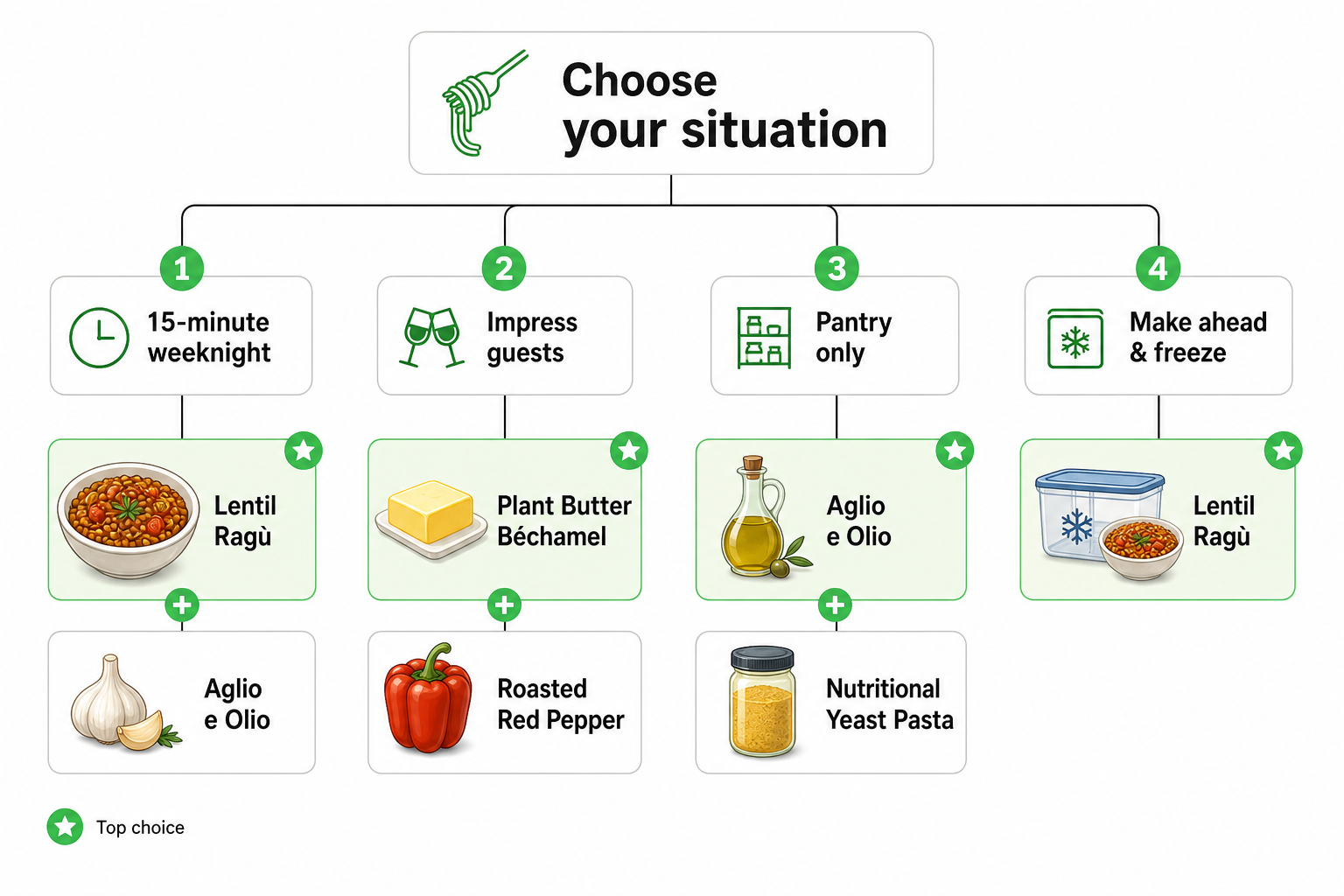
Use the guide above to pick the recipe that fits your moment. Every sauce on this list is genuinely good; the right pick is the one that matches your constraints.
Storage & Meal Prep
Refrigerator storage:
- Alfredo-style sauces: 4–5 days (store separately from pasta)
- Lentil ragù: 5 days
- Roasted vegetable sauce: 4 days
- Aglio e olio: 2 days (oil separates during storage)
Freezer storage:
- Alfredo sauces: up to 1 month (thaw and thin with plant milk when reheating)
- Lentil ragù: up to 3 months (best freezer candidate)
- Roasted vegetable sauce: up to 2 months
Reheating: Always reheat sauces on the stovetop over low heat, never in the microwave (it can break emulsions and separate plant milks). Add a splash of plant milk if they’ve thickened during storage.
Try viafrance
If you’re building a vegan pasta repertoire, you’ll want to explore viafrance’s full recipe collection. Alex’s approach to cooking – ingredient-focused, technically confident, never condescending – is exactly what these sauces deserve. Check out her existing pasta recipes like Spaghetti with Meat Sauce for technique inspiration, and her about page to learn how she approaches food photography and recipe development. Every recipe on viafrance proves that good cooking is about passion and technique, not about whether you’re using dairy – and these nine vegan sauces live in that same spirit.
Frequently Asked Questions
Can I make these sauces ahead and freeze them?
Yes – lentil ragù, roasted vegetable, and oat milk Alfredo freeze beautifully for up to 3 months. Store them separately from cooked pasta, and thin with a splash of plant milk when reheating on the stovetop. Aglio e olio doesn’t freeze well because the oil separates, but the raw ingredients keep indefinitely in your pantry.
Why does cashew cream taste different from these methods?
Cashew cream is rich and heavy – it mimics dairy cream’s mouthfeel but can overpower delicate pasta flavors. Pasta water emulsification and plant-milk sauces create creaminess that lets garlic, herbs, and vegetables shine instead. Both work; these methods just taste lighter and more ingredient-forward, which is what Alex’s cooking celebrates.
What plant milk works best for Alfredo?
Oat milk (unsweetened, full-fat) is the MVP because it’s naturally creamy and thick without a strong flavor. Soy milk ranks second for stability in roux-based sauces. Almond milk works too but may need a cornstarch slurry to thicken properly. Avoid sweetened varieties – they’ll throw off your salt balance and make the sauce taste like dessert.
How do I prevent pasta water emulsion from breaking?
Keep the pasta and sauce hot, and add starchy pasta water slowly while tossing constantly for 30–60 seconds. The starch needs vigorous motion to bind properly with the fat. If it breaks, add a tablespoon of cold pasta water and toss harder – this often fixes it. Over-high heat can also break the emulsion, so keep your flame at medium once the pasta is in.
Can I use vegan parmesan in every recipe?
Absolutely. Violife and Trader Joe’s brands melt well and taste closest to dairy parmesan. You can also make a quick homemade version by blending 1 cup raw almonds with ½ cup nutritional yeast and 1 teaspoon salt in a food processor until fine. Sprinkle generously over any pasta, especially the Alfredo recipes where it adds authentic flavor depth.